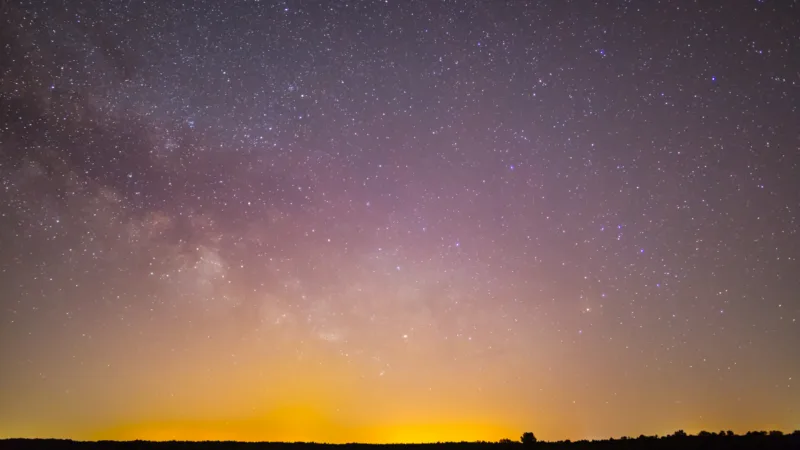
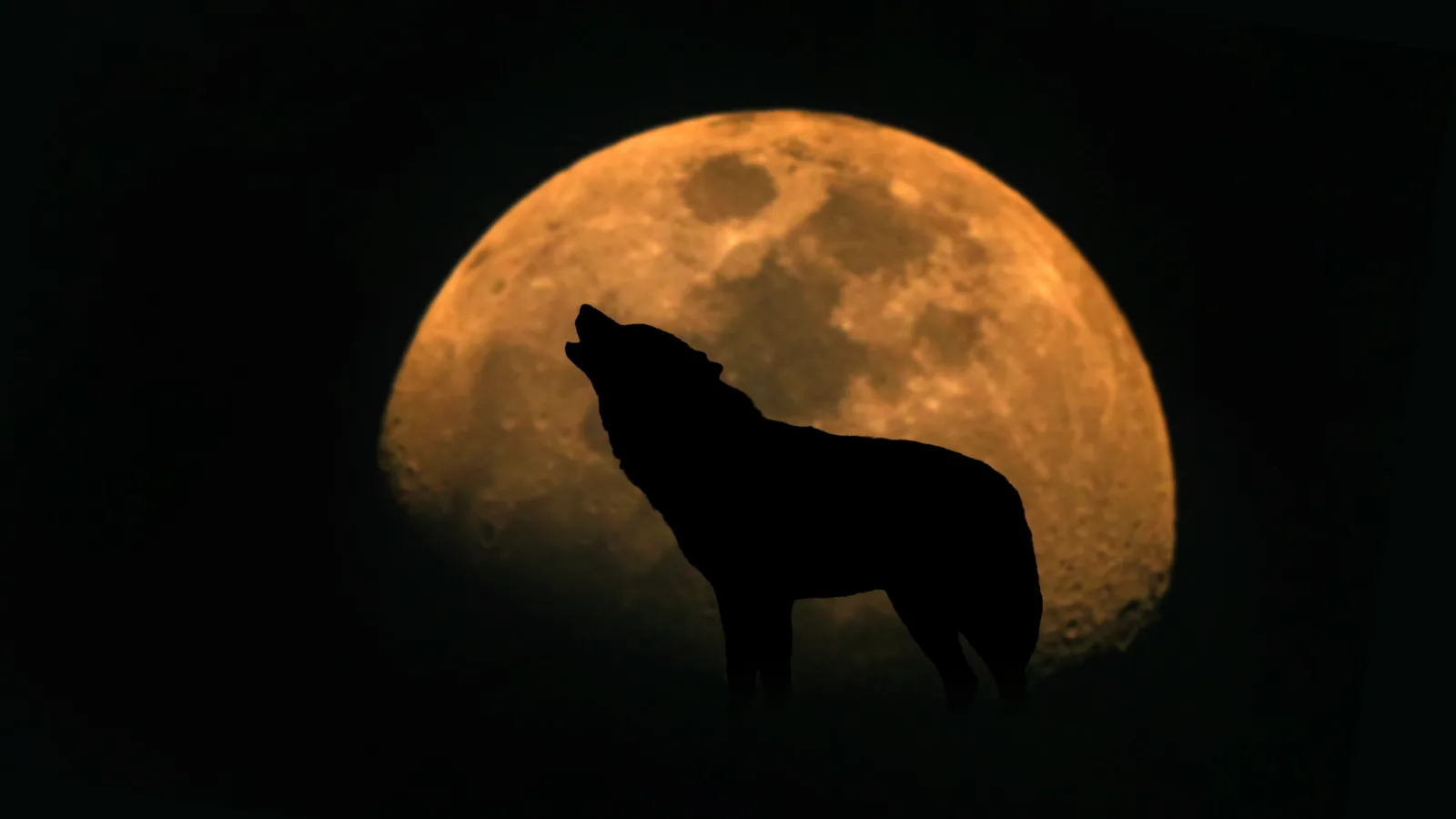
October 2026 is a generous month for anyone who looks up. Saturn reaches opposition in the first week and shines all night, the Draconids peak under a nearly moonless sky, a thin crescent Moon pairs with Mercury in the evening twilight, and the Hunter’s Moon closes the month. Here is what to watch for, night by night, with times in US Central Time. Every event below adjusts to your own city on our events pages.
The Moon this month
- Last quarter: Saturday, October 3, 8:25 AM CDT. The half-lit Moon rises around midnight and hangs in the morning sky.
- New Moon: Saturday, October 10, 10:50 AM CDT. The darkest nights of the month fall on either side of this date, from about October 7 to 13.
- First quarter: Sunday, October 18, 11:12 AM CDT. Good evening viewing of craters along the terminator with binoculars.
- Full Moon, the Hunter’s Moon: Sunday, October 25, 11:11 PM CDT (04:11 UTC on October 26). The full moon calendar has moonrise for your city.
The Hunter’s Moon is the full moon after the Harvest Moon, and like it, it rises only a little later each evening around the full date. In the days around October 25 you get a bright Moon coming up in the east soon after sunset for several nights in a row.
October 4: Saturn at opposition
Saturn sits directly opposite the Sun on October 4, which means it rises at sunset, stays up all night and is as bright as it gets this year at magnitude 0.6. It is the steady, pale yellow “star” climbing in the east after dark. Any small telescope shows the rings; even 10x binoculars reveal the planet’s oval shape. Opposition is not a single-night affair: Saturn is at its best for two or three weeks either side, so pick any clear night in early October. Our planets page shows where it is in your sky right now.
October 5 and 6: crescent Moon meets Mars and Jupiter
Before dawn on October 5 the waning crescent Moon passes about one degree from Mars, low in the east. The following morning, October 6, it slides even closer to Jupiter, well under one Moon-width apart, at around 5:24 AM CDT. Jupiter is far brighter than anything nearby, so the pair is easy to spot with the naked eye about an hour before sunrise. It is a fine photo opportunity for a phone on a small tripod.
October 8: the Draconids, with no Moon in the way
The Draconids are a minor shower most years, with up to 10 meteors an hour, but 2026 gives them their best possible stage: the Moon is only 4% lit and gone from the sky. Unlike most showers, the Draconids are an evening event. Their radiant in Draco is highest right after nightfall, so look from about 8 PM to midnight on October 8 rather than staying up until dawn. Face north-east, give your eyes twenty minutes to adapt, and expect slow, graceful meteors. The meteor shower calendar shows the radiant’s height for your city through the night.
October 12: Mercury and a two-day-old Moon
Mercury reaches its greatest elongation east on October 12, the farthest it strays from the Sun in the evening sky this cycle. Look very low in the west about 30 to 40 minutes after sunset. The same evening a razor-thin crescent Moon, just two days past new, sits about two degrees from the planet. That crescent is your finder: locate the Moon first, then look for the star-like point beside it. You need a flat, unobstructed western horizon and a clear sky; binoculars help.
October 21: the Orionids
The Orionids, dust from Halley’s Comet, peak in the early hours of October 21 with up to 20 meteors an hour. This year a 75% waxing gibbous Moon interferes, but it sets in the small hours, leaving a darker window before dawn. Plan for roughly 3 AM to first light, with Orion high in the south. Orionids are fast and often leave glowing trains that linger for a second or two.
Venus leaves the evening sky
If you have enjoyed Venus as the brilliant evening star, October is your last chance for a while. It sinks lower each evening and reaches inferior conjunction, passing between Earth and the Sun, on October 24. Do not look for it near that date. Venus returns in the morning sky in November, rising before the Sun as the “morning star” through the winter.
Early November preview
On the mornings of November 2 and 3 the waning Moon again passes Mars and Jupiter, a repeat of the October pairing one lunar month later. The Beaver Moon follows on November 24.
How to get the most from October
- Check the moon phase for your date on our moon phase page. Dark skies between October 7 and 13 favour meteors and the Milky Way; bright nights around the 25th favour the Moon itself.
- Dress for the season. October nights get cold fast once you stop moving. A blanket and a reclining chair make meteor watching comfortable.
- Turn on Sky Event Alerts using the button on the right of this page and we will send one short notification the day before each of these events.