The Moon does not rise in the east. It rises somewhere along a stretch of the eastern horizon that is far wider than the Sun’s, and it crosses that whole stretch every two weeks. From Dallas this autumn the Hunter’s Moon rose at an azimuth of 57 degrees, well north of east, and twelve days later the new moon rose at 117 degrees, well south of east: a swing of 60 degrees, more than the Sun manages in six months. This guide explains what sets the rising point, why the swing is unusually large right now, and how to use the numbers to catch a moonrise behind the landmark you want.
What decides where anything rises
Two things: the object’s declination, its distance north or south of the celestial equator, and your latitude. Anything on the celestial equator rises due east everywhere on Earth. The further north the object, the further north of east it rises; the further south, the further south of east. Your latitude stretches the effect: a given declination moves the rising point further from east the closer you are to the poles.
The Sun’s declination runs between 23.4 degrees north at the June solstice and 23.4 degrees south at the December solstice, and it takes a year to go round. From Dallas, at latitude 32.8 degrees north, sunrise therefore moves between azimuth 61 degrees (east-north-east) in June and 118 degrees (east-south-east) in December, through 89 degrees at the equinoxes. That is the familiar seasonal slide.
Why the Moon swings further, and faster
The Moon follows roughly the same path as the Sun, the ecliptic, but it covers the whole circuit in 27.3 days instead of a year. So its declination goes from its northern extreme to its southern extreme in under two weeks, and the rising point slides from one end of the horizon to the other in the same time, about 5 degrees a night at the fastest.
The Moon’s orbit is also tilted 5.1 degrees to the ecliptic, and the tilt slowly turns round the sky over 18.6 years. For half of that cycle the tilt adds to the ecliptic’s own 23.4 degrees and the Moon’s declination can reach 28.7 degrees north and south: that is a major lunar standstill, the last of which peaked in 2024 and 2025. For the other half the tilt subtracts, the Moon stays within 18.1 degrees of the equator, and the swing is at its smallest: a minor standstill, next due in 2034. We are still near the top of the cycle, which is why this autumn’s extremes are so far apart.
The numbers for this month
From our rise and set calculations for Dallas:
- October 29: moonrise at azimuth 56.6 degrees, further north than the midsummer Sun ever rises (61 degrees). The Moon’s declination that night is 27.5 degrees north. Moonset at 304 degrees, in the north-west.
- November 9, new moon: moonrise at 117 degrees, almost exactly where the midwinter Sun rises, with the Moon 21 degrees south. Moonset at 241 degrees, in the south-west.
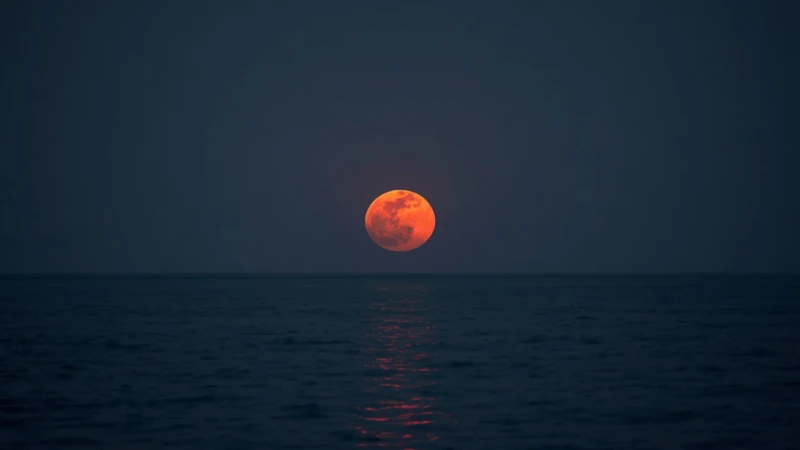
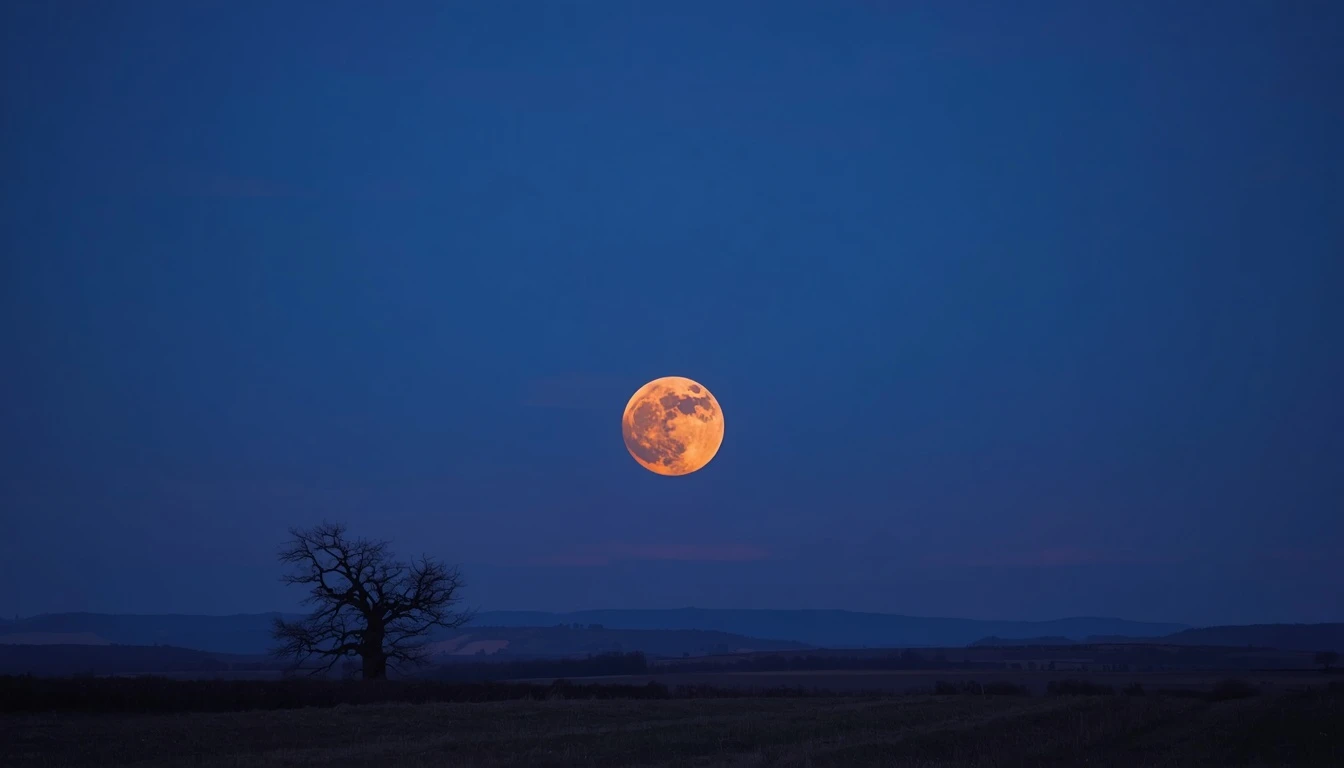
- November 24, the Beaver Moon: moonrise at 58 degrees, back in the north-east, which is why the full moons of late autumn and winter ride so high across the sky.
- December 22: moonrise at 57 degrees again, two weeks after the new moon of the 8th rose at 116 degrees.
The pattern is simple once you see it: the full moon rises where the Sun rises six months later. In November the full moon rises in the north-east like the June Sun and climbs high; in May and June it rises in the south-east like the December Sun and stays low. Winter full moons are high and long, summer full moons low and brief.
Latitude turns the dial
The same two nights from other cities, from our calculations:
- London, 51.5 degrees north: moonrise at 42 degrees on October 29 and 127 degrees on November 9, an 85-degree swing. The northern moonrise is north-east, almost north-north-east, which is why the autumn full moon in Britain can rise behind a landmark you think of as northern.
- Manila, 14.6 degrees north: 61 degrees and 111 degrees, a 50-degree swing. Near the equator the rising points are tighter and the Moon climbs almost straight up from them.
- Sydney, 33.9 degrees south: 56 degrees and 114 degrees, the mirror of Dallas. The Moon’s northern extreme rises in the north-east for Sydney as well, but there it is the low-riding Moon, and the southern extreme is the high one.
At latitudes above about 62.5 degrees the Moon’s 27.5-degree declination makes it circumpolar: our calendar for Reykjavik showed no moonset at all from October 29 to 31 this year. Our guide on why the Moon rises later each night covers that side of the same geometry.
How to use it
- Photographing a moonrise behind a landmark: you need the azimuth of the landmark from your viewpoint and a night when the Moon’s rising azimuth matches it. Because the rising point moves about 3 to 5 degrees a night, there are only one or two nights a month that line up, and the full moon only matches a given landmark once or twice a year. Check moonrise times on our moon calendar, then the direction on a planning app or a star chart for that moment.
- Reading the sky: a Moon rising far to the north-east will be high in the sky at its best and up for 14 hours or more; one rising in the south-east stays low and is up for 10. Winter full moons are the long, high ones.
- Understanding old stones: the northern and southern extremes of moonrise are what many ancient alignments appear to mark, because the far-north moonrise only happens around a major standstill every 18.6 years, and it is a striking thing to see from a fixed spot.
The Moon’s rising point will keep its wide swing through 2027 and then narrow year by year toward the 2034 minor standstill, when the extremes will be about 68 and 112 degrees from Dallas, inside the Sun’s range. If you want to see the Moon rise further north than the Sun ever does, the next two winters are the time.