The Moon is above the horizon for about twelve and a half hours out of every twenty-four, and half of that time, on average, is daylight. It is visible by day for the same reason it is visible by night: it is a large, bright object lit by the Sun, and a clear blue sky is not bright enough to hide it. What changes through the month is when it is up, and that follows the phase exactly. This guide works through the pattern with real rise and set times from our calendar, so you can predict a daytime Moon rather than stumble on one.
The rule: phase tells you the hours
The Moon’s position relative to the Sun is what the phase measures. A new moon is next to the Sun in the sky, so it rises and sets with the Sun and spends all its time in daylight, invisible in the glare. A full moon is opposite the Sun, so it rises at sunset and sets at sunrise and is never up in daylight. Everything else is in between:
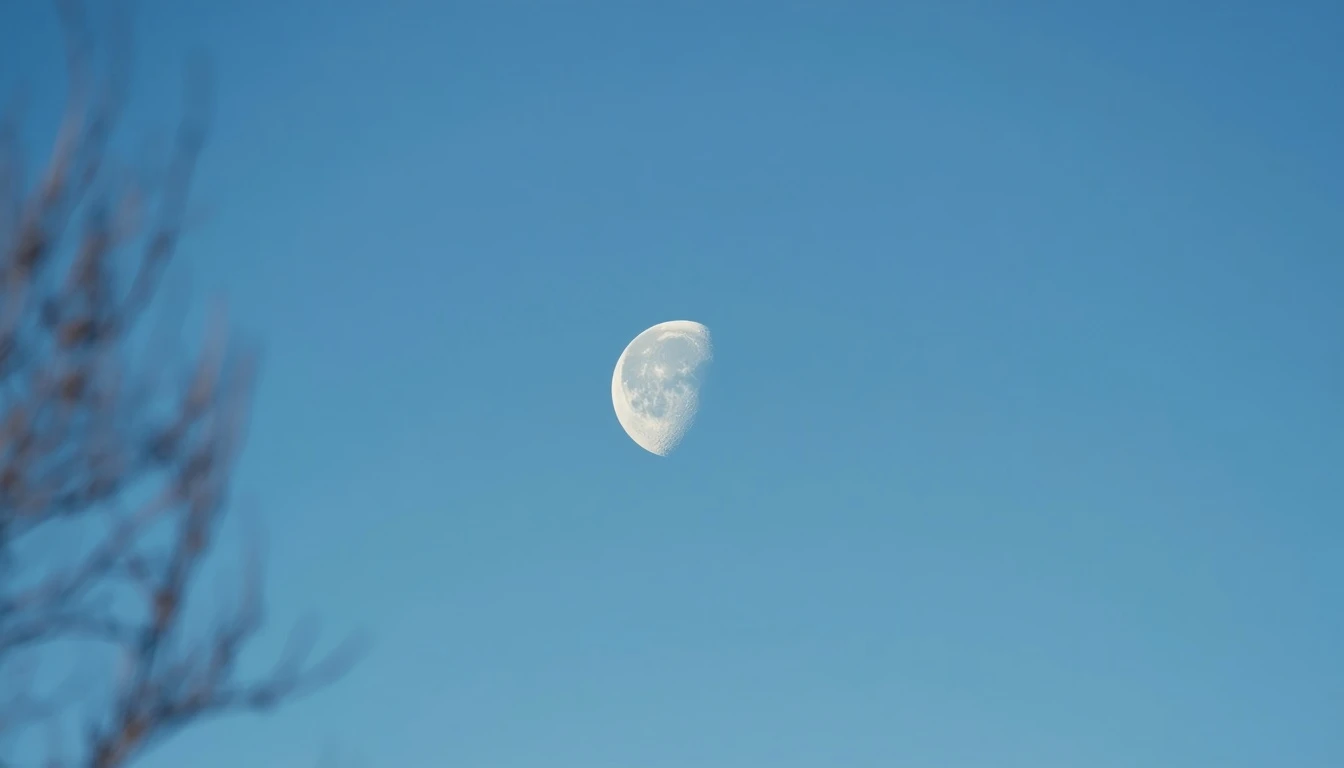
- Waxing crescent and first quarter: the Moon trails the Sun by a few hours, so it rises in the morning or around midday and is in the sky all afternoon. A first-quarter Moon is the classic daytime Moon, a half disc in the eastern or southern sky in the afternoon.
- Waxing gibbous: rises mid to late afternoon, visible low in the east before sunset.
- Full: night only.
- Waning gibbous: rises late evening, still up at sunrise and visible in the western sky through the morning.
- Last quarter and waning crescent: rises after midnight or in the small hours, high in the south at sunrise, and visible all morning until it sets around midday or early afternoon.
So the daytime Moon lives in the afternoon when it is waxing and in the morning when it is waning. If you see a half Moon at 3 PM, it is a first quarter and will be full in a week; a half Moon at 9 AM is a last quarter and will be new in a week.
The numbers for one month
From the Dallas calendar for November 2026, with sunrise and sunset for comparison:
- Last quarter, November 1: the Moon sets at 1:21 PM; sunrise is 6:45 AM. It is in the daytime sky for the whole morning, about six and a half hours.
- New moon, November 9: rises 7:19 AM, sets 5:30 PM, sunrise 6:52 AM, sunset 5:29 PM. Up in daylight for ten hours and invisible for all of them, within a few degrees of the Sun.
- First quarter, November 17: rises 1:14 PM, sunset 5:24 PM. Four hours of afternoon visibility, then the evening.
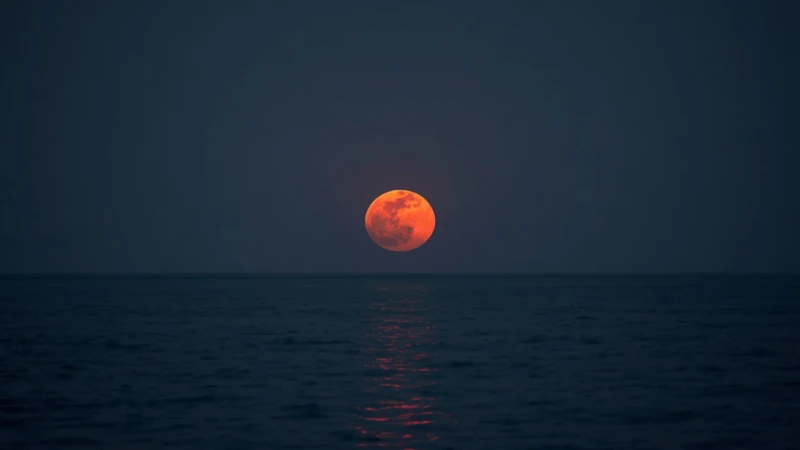
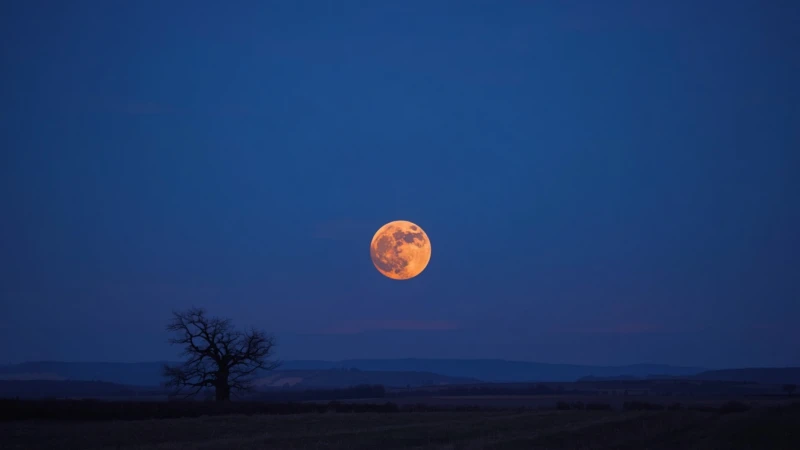
- Full moon, November 24: rises 5:17 PM, five minutes before sunset, and sets at 7:15 AM, ten minutes after sunrise. Almost entirely a night object, with a few minutes of overlap at each end.
Those overlaps at full moon are the only reason you ever see a full Moon in a daylit sky: a rising full Moon in the east while the Sun is still just up in the west, which happens because the Moon is not exactly opposite the Sun and because refraction lifts both above the true horizon. The moon calendar gives these times for your own city.
Why it is so easy to miss
The daytime Moon is faint by comparison with the night one, not because it is any dimmer but because the sky around it is bright. Its surface is roughly as dark as worn asphalt, which is why it looks pale blue-white in the day: you are seeing grey rock plus the blue of the air in front of it. A thin crescent is hardest, because there is little lit area and it is close to the Sun; a gibbous Moon in a deep blue sky away from the Sun is the easiest, and in dry high-altitude air it is striking. Look for it in the quarter of the sky opposite the Sun’s side, and check the calendar first so you know which side of the sky to search.
The things the daytime Moon can tell you
- Which way the Sun is. The lit side of the Moon always faces the Sun, even when the Sun is below the horizon. In daylight you can check this directly: the bright limb points at the Sun, and the line across the half Moon is at right angles to it.
- Roughly what time it is. A first-quarter Moon is due south at about 6 PM, a last quarter at about 6 AM, a full Moon at midnight (an hour later with daylight saving time). Where it is in the sky, combined with its phase, gives the time to within an hour or so.
- That the phases are not Earth’s shadow. You can see the Sun and a half Moon in the same sky at once, 90 degrees apart. Earth’s shadow cannot be falling on the Moon when the Sun is shining on both. Our explainer on why the Moon has phases builds on exactly this observation.
Daytime Moon with binoculars and telescopes
The daytime Moon is a good target. Contrast is lower, but the craters along the terminator show well, the glare that makes the night Moon uncomfortable in a telescope is gone, and there is no need to wait for darkness. A polarising filter deepens the sky and improves the contrast. The best daytime views are of the first and last quarter, when the terminator runs down the middle of the disc and the Moon is 40 degrees or more above the horizon, which for the first quarter means the late afternoon and for the last quarter the mid-morning. For what to look for along the terminator, see our guide to the Lunar X and other shadow effects.
One safety note: never sweep binoculars or a telescope across the daytime sky looking for the Moon. Find it with your eyes first, then point the instrument at it, so there is no chance of catching the Sun.