The honest answer is that controlled trials have not found a measurable effect of the Moon’s phase on germination, growth or yield. The physics is against it too: the Moon’s pull on a seedling is far smaller than the weight of the water in the pot, and full moonlight is a few hundred thousand times fainter than sunlight. And yet gardening by the Moon has survived for thousands of years, and the calendar on this site still gets used every day. This article sets out what the research says, where the Moon genuinely does affect living things, and why a lunar planting calendar can still be a useful tool when you know what it is and is not doing.
What the tradition says
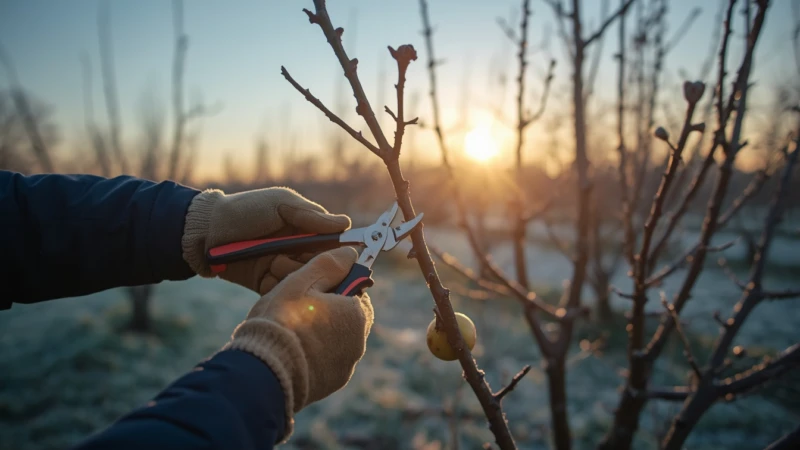
The common version splits the month into four quarters. From new moon to first quarter you sow leafy crops; from first quarter to full, crops that fruit above ground; from full to last quarter, root crops, bulbs, trees and perennials; and from last quarter to new you rest the soil, weed, harvest for storage and prune. The idea is that the waxing Moon draws sap and growth upward and the waning Moon draws it down into the roots. Some systems add the zodiac sign the Moon is in, and biodynamic growers use a more elaborate calendar of root, leaf, flower and fruit days. Our Gardening by the Moon page follows the four-quarter rule and marks every day of the month with its task.
What the research says
The most thorough recent review is by Olga Mayoral and colleagues at the University of Valencia, published in the journal Agronomy in 2020. They went through more than a hundred scientific references and the agricultural textbooks that students are taught from, looking for any reliable evidence that lunar phase affects plant physiology. They found none, and concluded that the physical mechanisms usually proposed, gravity and moonlight, cannot do what is claimed.
The gravity argument is simple. The Moon raises ocean tides because the ocean is thousands of kilometres across, so the Moon’s pull differs measurably from one side to the other. A plant is a few metres tall at most; the difference in the Moon’s pull between its roots and its leaves is vanishingly small, and in any case it is the same for a bean sown at new moon as for one sown at full. A gardener walking past the bed exerts a larger tidal force on the plant than the Moon does.
Moonlight is a slightly better candidate, because plants do respond to light. But a full moon delivers roughly a quarter of a lux, against about 100,000 lux from the midday Sun, and the few experiments that have looked for a germination or growth response to that level of light have found nothing consistent. Reviews going back to the 1930s, when the lunar planting idea was tested in earnest, reached the same conclusion: results that looked promising in one trial failed to repeat in the next.
Where the Moon really does matter
None of this means the Moon has no effect on living things. Marine animals famously time spawning to the lunar cycle. On land, a Mediterranean shrub called Ephedra foeminea was found by Swedish botanists in 2015 to release its sticky pollination droplets on the night of the July full moon, year after year; the droplets glitter in moonlight and attract the night-flying insects that pollinate it. That is a real lunar rhythm, but it works through animal behaviour and the timing of one event, not through faster growth.
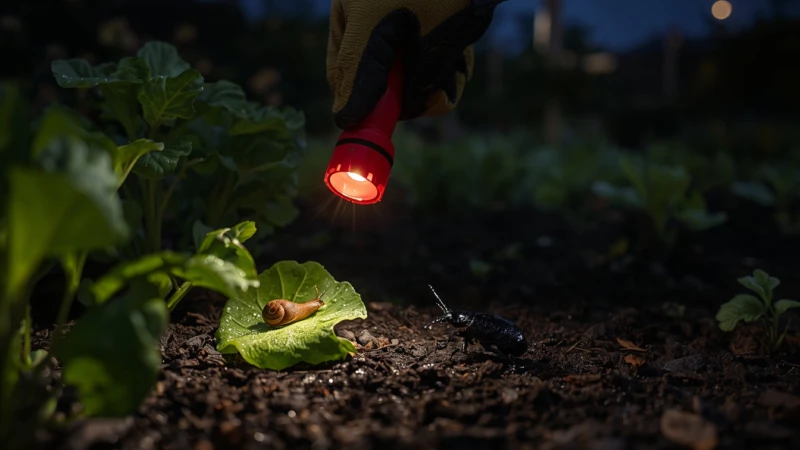
For gardeners, the Moon’s most useful effect is indirect: light. A bright gibbous Moon lets you water, weed or pick slugs after dark, and a clear full-moon night is noticeably colder because clear skies radiate heat away, which is why frost folklore attaches to the full moon. The sky is cold because it is clear, not because the Moon is full, but the full moon is when you notice.
Why the calendar still earns its place
If the phase does not change how the plant grows, what is a lunar calendar for? Three things, and they are not small.
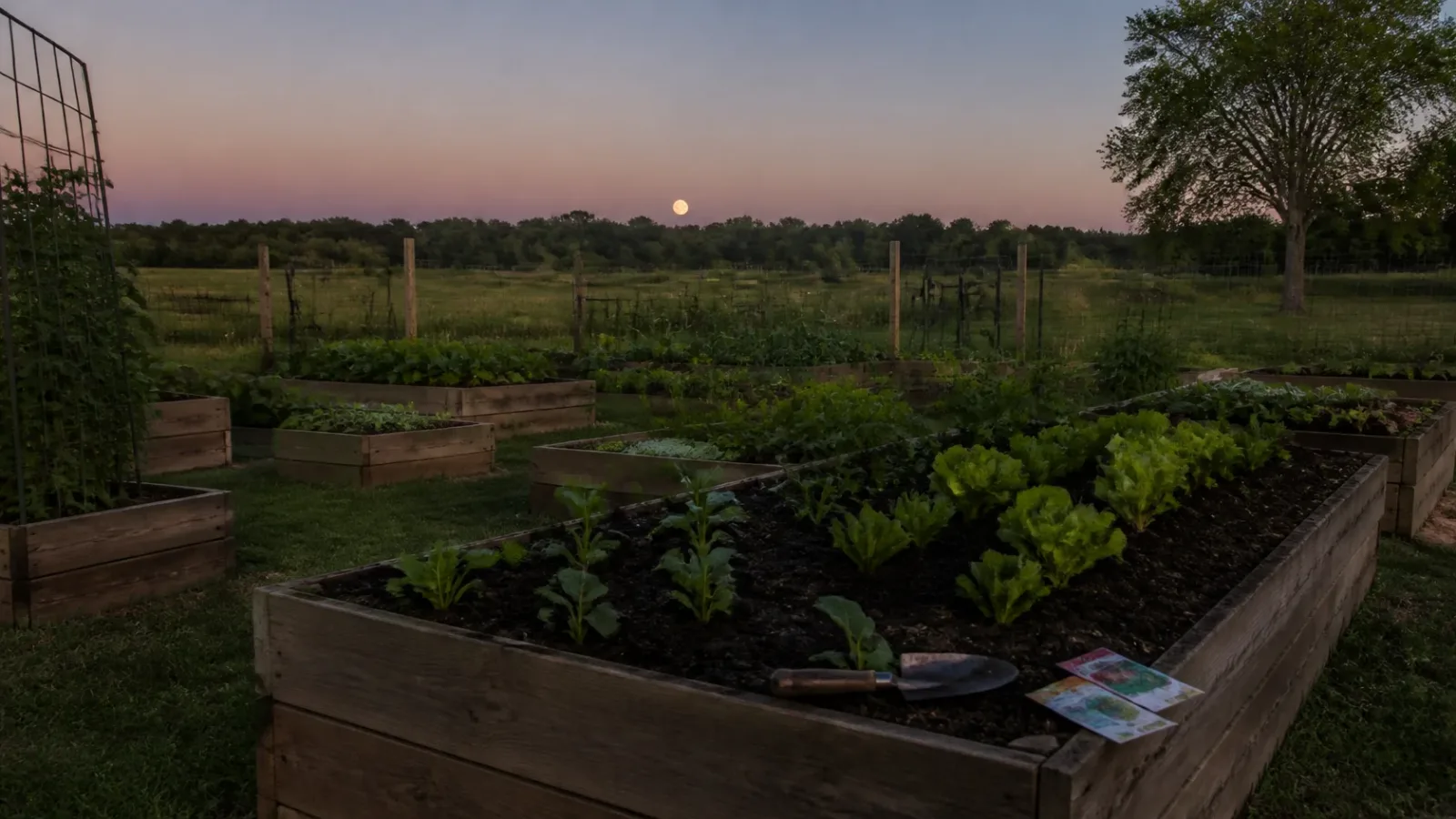
- It is a schedule you will actually follow. The quarters are about seven days each, so the calendar turns the month into four jobs: sow leafy things, sow fruiting things, plant roots and perennials, then tidy up. Gardeners who follow it get into the beds every week, and regular attention is the biggest single predictor of a good harvest.
- It spreads sowings. Sowing lettuce only in the first quarter means a fresh batch every month rather than one glut, which is exactly the succession sowing that every allotment book recommends.
- It fits the season anyway. The tasks tradition assigns to the waning Moon, pruning, weeding, harvesting for storage, are the ones that do not need warmth or long days, so putting them in the second half of the month costs nothing.
Treat the calendar as a rhythm, not a guarantee, and it does no harm and some good. What it should never do is override the weather or the season. A bean sown on the “right” Moon day into cold wet soil in April will still rot; a bean sown on the “wrong” day into warm soil in late May will come up in a week.
The Moon’s calendar for the next month
The Hunter’s Moon is full on Sunday, October 25 (11:11 PM Central; October 26 in Europe and Asia), so the traditional windows run as follows, from the November planting calendar:
- October 26 to November 1: third quarter, waning gibbous. Root crops, bulbs, garlic, trees and perennials. Last quarter is on November 1.
- November 2 to 8: fourth quarter, waning crescent. Rest the soil: weed, mulch, turn compost, lift and store, prune to discourage regrowth. New moon is on November 9 (1:02 AM Central).
- November 9 to 16: first quarter, waxing crescent. Leafy crops under cover in the north, salads and brassicas outdoors in mild climates and the southern hemisphere.
- November 17 to 24: second quarter, waxing gibbous. Fruiting crops; in Sydney and Cape Town that means the main tomato, bean and cucumber sowings of spring.
In the northern hemisphere late October and November are about putting the garden to bed, and the waning Moon windows line up neatly with the real jobs of the season: planting garlic and spring bulbs, mulching, sowing broad beans and green manures. Our earlier guide to autumn gardening by the Moon has the detail. The quarter boundaries on the calendar are set by the phase at midday UTC, so when a phase changes close to midnight a day can shift by one in some time zones, which tells you how much precision the tradition can bear.
The bottom line
Sow by the soil temperature, the frost dates and the daylight, and let the Moon set the rhythm of your week. If you enjoy following the phases, the calendar is there for every month and every city, and the moon phase page shows tonight’s Moon, so you will at least know when there is enough light to garden by.