The Hunter’s Moon of 2026 is full at 11:11 PM Central Time on Sunday, October 25, which is 04:11 UTC on Monday, October 26. So in the Americas the full moon falls on the evening of the 25th, and in Europe, Africa and Asia on the 26th. It is the first full moon after the Harvest Moon, and like it, it rises close to sunset for several evenings in a row, giving a run of bright, early moonrises. Times below are for Dallas; the October full moon page converts them to your city and time zone.
When to see it
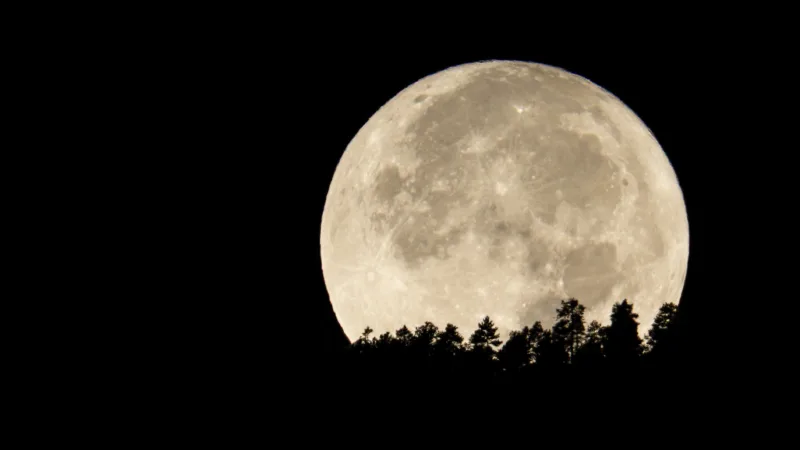
The Moon looks full to the eye for about a day either side of the exact moment, so you have three good evenings. The best show is moonrise, when the Moon comes up large and orange on the eastern horizon while the western sky is still bright.
- Saturday, October 24: the Moon rises at 5:40 PM, 97% lit, an hour before sunset.
- Sunday, October 25, full moon night: the Moon rises at 6:13 PM, half an hour before sunset at 6:42 PM, and is exactly full at 11:11 PM. It sets at 7:04 AM on Monday.
- Monday, October 26: the Moon rises at 6:52 PM, ten minutes after sunset, 99% lit. This is the evening for the classic view: a full-looking Moon rising in twilight.
- Tuesday, October 27: the Moon rises at 7:38 PM, 97% lit, and passes the Pleiades star cluster that evening.
For the moonrise itself you need a clear view to the east. Be in place ten minutes early; the Moon clears the horizon faster than you expect.
Why it rises so close to sunset each night
On average the Moon rises about 50 minutes later each day. Around the Hunter’s Moon that gap shrinks: this year moonrise comes 33 minutes later from the 24th to the 25th, 39 minutes later the next evening and 46 the evening after. The reason is the angle of the Moon’s path. In northern autumn the ecliptic meets the eastern horizon at a shallow angle in the evening, so the Moon’s daily eastward step carries it along the horizon more than below it, and it needs less extra time to rise. The effect is strongest at the Harvest Moon in September and still clear a month later. Before electric light it mattered: several evenings of moonlight right after sunset extended the working day.
Why it is called the Hunter’s Moon
The Hunter’s Moon is defined by its place in the calendar, not by the month: it is the full moon that follows the Harvest Moon, which is the full moon nearest the September equinox. This year the Harvest Moon was September 26, so the Hunter’s Moon falls in October. In years when the Harvest Moon comes in early October, the Hunter’s Moon moves to November.
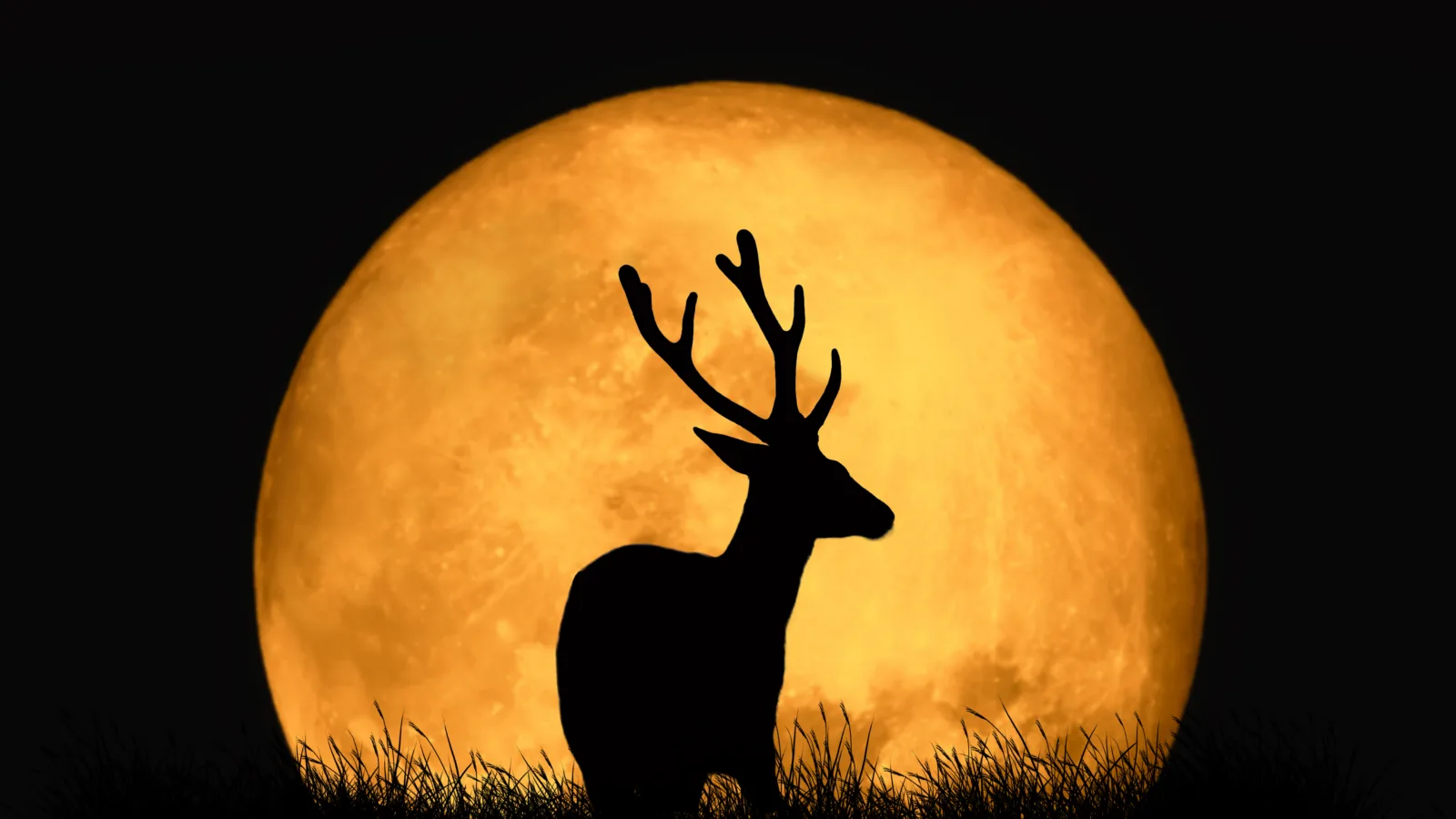
The name comes from the season. With the fields cleared after harvest, deer and other game were easy to see by the light of the October moon, and it was the time to lay in meat for winter. The same moon has been called the Blood Moon and the Sanguine Moon, names that come from the hunt and have nothing to do with eclipses, and in Britain it was sometimes the Dying Grass Moon. The Hunter’s Moon page has the dates for the coming years.
Is it a supermoon?
No. At the moment of full moon the Moon is 368,900 km away, close to its average distance, so this is an ordinary-sized full moon, neither a supermoon nor a micromoon. It will still look enormous at moonrise. That is the Moon illusion, a trick of perception that makes any Moon near the horizon seem larger than the same Moon overhead. Hold a small coin at arm’s length against it at moonrise and again at midnight and you will find it has not changed size.
Why it looks orange at moonrise
When the Moon is low, its light passes through far more of the Earth’s atmosphere than when it is high. The air scatters blue light away and lets red and orange through, the same effect that reddens the setting Sun. As the Moon climbs it turns yellow and then white. Dust, smoke and humidity near the horizon make the colour deeper.
How to photograph it
- Shoot at moonrise on the 25th or 26th, when there is still light on the landscape and the Moon is low enough to frame with trees, buildings or a skyline.
- Use the longest lens you have and stand far back from your foreground subject; that is what makes the Moon look big beside it.
- On a phone, tap the Moon to focus and drag the exposure down until you can see detail on its face instead of a white blob.
- Use a tripod or a steady surface. In twilight the exposure is longer than you think.
What else is in the sky
A full moon washes out faint stars, but the planets hold their own. Saturn is the bright steady point well to the Moon’s right in the evening, high in the south by 10 PM. On Tuesday the 27th the Moon passes in front of the Pleiades star cluster for much of North America, a sight for binoculars. Before dawn, Jupiter and Mars are high in the east. The Orionid meteor shower, which peaks on October 21, is still producing a few meteors, though the bright Moon will hide most of them.
After the Hunter’s Moon
The next full moon is the Beaver Moon on November 24. Every full moon of the year, with its name, time and distance, is on the 2026 full moon calendar, and the moon calendar gives moonrise and moonset for your own city on any date.