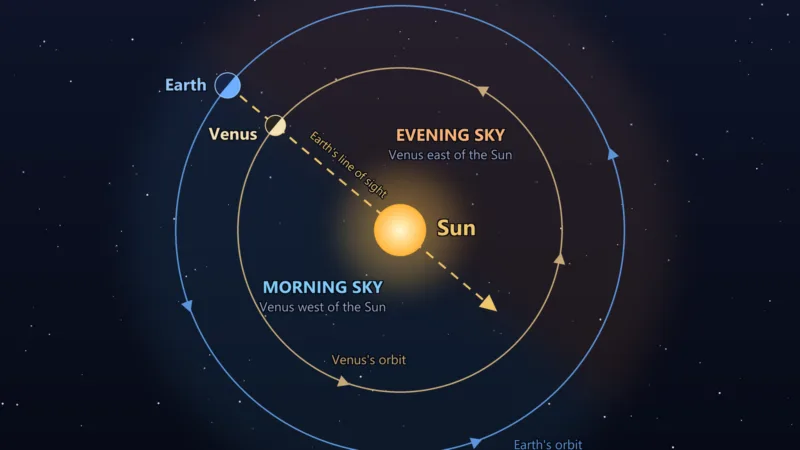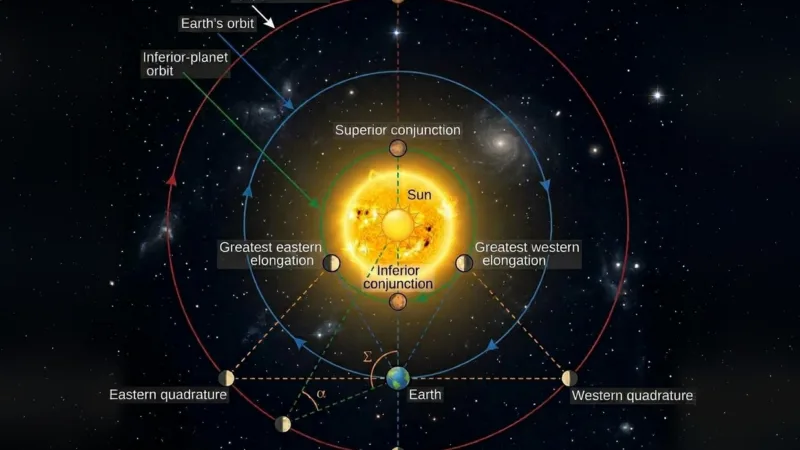
Neptune reached opposition on September 26, 2026, at 01:08 UTC, which is the evening of September 25 for the United States (8:08 PM Central Time). That is the moment Earth passed directly between the Sun and Neptune, putting the farthest planet as close and as bright as it gets this year. Opposition is not a one-night event: Neptune stays near its best for the rest of September and all of October, rising around sunset and crossing the southern sky through the night. It is also the easiest month of the year to find it, because bright Saturn is parked right beside it. Times below are for Dallas; our planets page adjusts them to your city.
What opposition means for Neptune
At opposition a planet sits opposite the Sun in our sky, so it rises as the Sun sets, reaches its highest point around midnight, and sets at dawn. It is also at its closest to Earth for the year. For Neptune, “close” is still about 4.3 billion kilometres away, and “bright” is magnitude 7.8, about three times fainter than the naked-eye limit even from a dark site. That is why nobody saw Neptune before telescopes: it was found in 1846 by calculation, not by eye. What opposition gives you is the best combination of brightness, altitude and hours of darkness to go and look for it with optics.
Where Neptune is right now
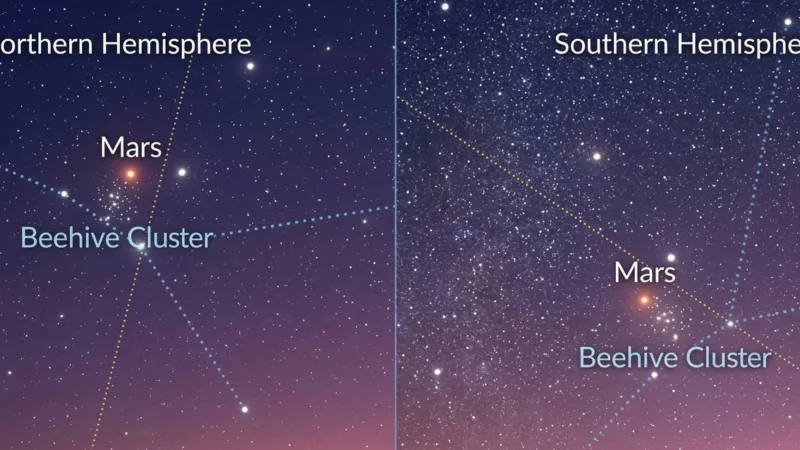
Neptune is in the constellation Pisces, which is faint and hard to trace, so use the one bright landmark in that part of the sky: Saturn. The two planets are close together this year, with Saturn about 9 degrees east of Neptune in late September, a little less than the width of your fist held at arm’s length. When they rise in the east after sunset, Saturn is the obvious yellowish “star” and Neptune sits to its right and slightly below. By midnight, with the pair high in the south, Neptune is to the lower right of Saturn.
From Dallas on September 27, Neptune is about 6 degrees above the eastern horizon at dusk, climbs to 53 degrees in the south-east around midnight, and sets before dawn. The higher it is, the less air you look through, so the hours between about 10 PM and 2 AM are the best window in early autumn. Saturn follows a nearly identical track and reaches its own opposition on October 4, so the two planets stay paired through the whole month.
How to see it
With binoculars
Ordinary 7×50 or 10×50 binoculars will show Neptune as a faint point of light, indistinguishable from a dim star. The trick is knowing which point it is. Centre Saturn, then sweep slowly to the right by roughly two binocular fields. Compare what you see with a star chart or a phone app set to your time; Neptune is the “star” that appears on the chart as a planet and that shifts position against the background stars from night to night. Steady the binoculars on a fence, a car roof or a tripod adapter; hand-held, the faint point is easy to lose.
With a telescope
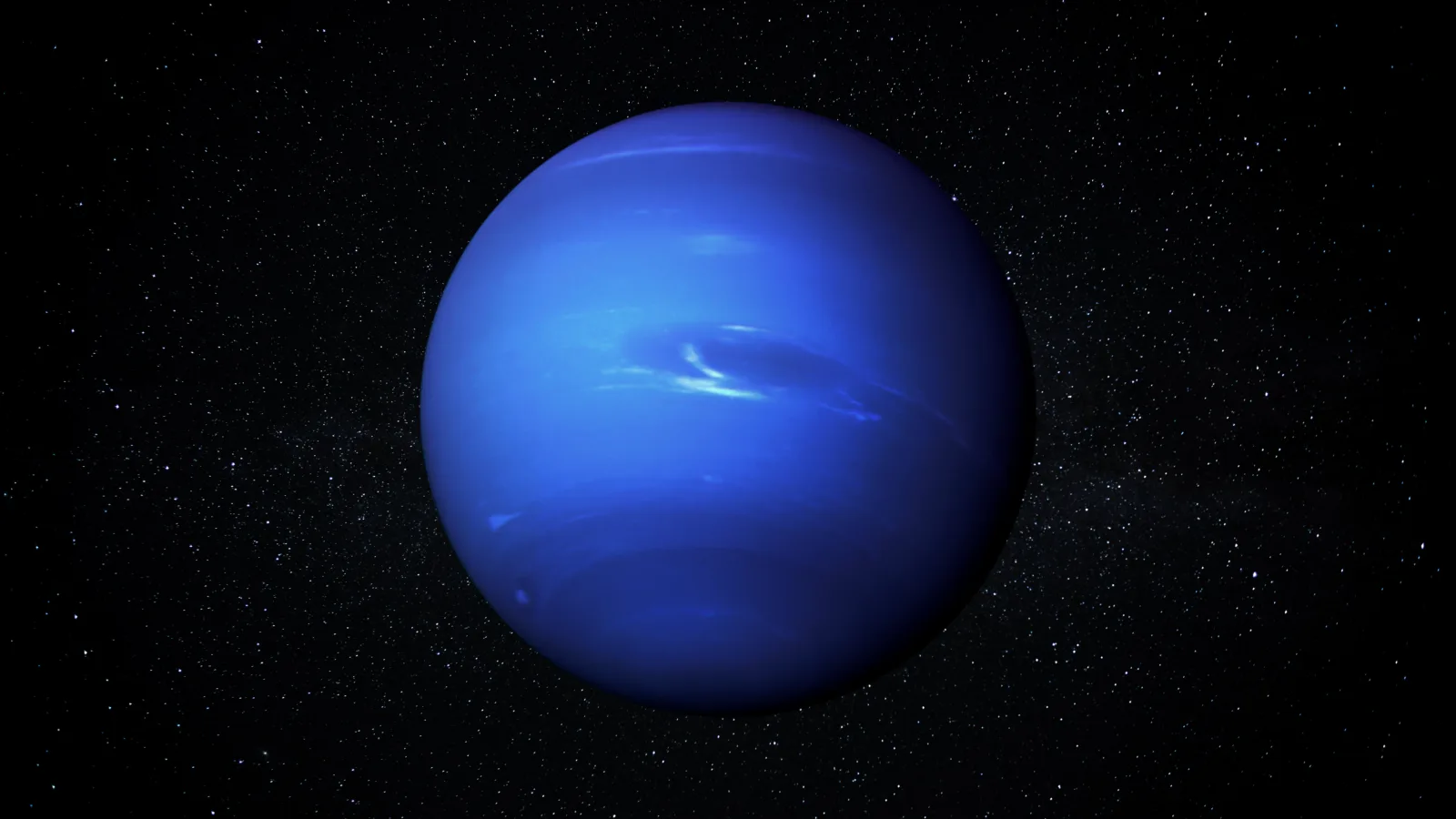
A telescope is where Neptune stops being a dot. At 150 to 200 times magnification in a 6-inch or larger scope it becomes a tiny, distinctly blue-grey disc, unmistakably not a star. Do not expect detail: Neptune is only about 2 arcseconds across, a fraction of the width of Saturn’s rings. The pleasure is in the colour and in knowing what you are looking at. Let the telescope cool outdoors for half an hour first, and wait for moments of steady air when the disc snaps into focus.
Pick the right nights
- Now to October 6: the Moon is waning after the Harvest Moon and rises later each night, so evenings get darker as the week goes on. Last quarter is October 3.
- October 7 to 13: the best moonless window, around the new Moon of October 10. Neptune is still near peak brightness and high in the south by 11 PM.
- Around October 25: the Hunter’s Moon washes out faint objects; leave Neptune for another week.
Get away from streetlights if you can. Neptune’s faintness is the whole challenge, and a suburban sky can cost you the difference between seeing it and not.
The Harvest Moon triangle you may have seen
On the night of September 26 the full Harvest Moon rose in the east with Saturn close by and Neptune a little further along, the three forming a wide triangle low in the eastern sky. NASA’s monthly skywatching guide singled it out as the easiest way to point at Neptune’s neighbourhood, even though the Moon’s glare hid the planet itself. If you photographed the moonrise that night, Saturn is probably in the frame; Neptune almost certainly is not, which is a fair illustration of the several-hundred-fold brightness gap between them.
Why this year is a good one
Neptune takes 165 years to orbit the Sun, so it drifts through Pisces for years at a time and its oppositions arrive about two and a half days later each year. What changes from year to year is the company it keeps. Having Saturn within a fist’s width is a rare convenience that will not last: Saturn moves on eastward over the next couple of years and the gap opens up. If you have ever wanted to tick off all the planets, this autumn removes the usual excuse for skipping the last one.
Uranus, the other ice giant, reaches its own opposition on November 25 at magnitude 5.6, bright enough for binoculars with much less effort. A clear night in late November can give you both outer planets in one session.
Checklist
- Binoculars or any telescope; a 6-inch scope shows the disc.
- A star chart or app showing Neptune’s position for tonight; it moves slowly, so a chart from this week is fine.
- Saturn as your signpost: Neptune is about 9 degrees to its west.
- A dark site, a steady mount and 10 to 20 minutes for your eyes to adapt.
- Our Neptune opposition page for rise, peak and set times in your city.