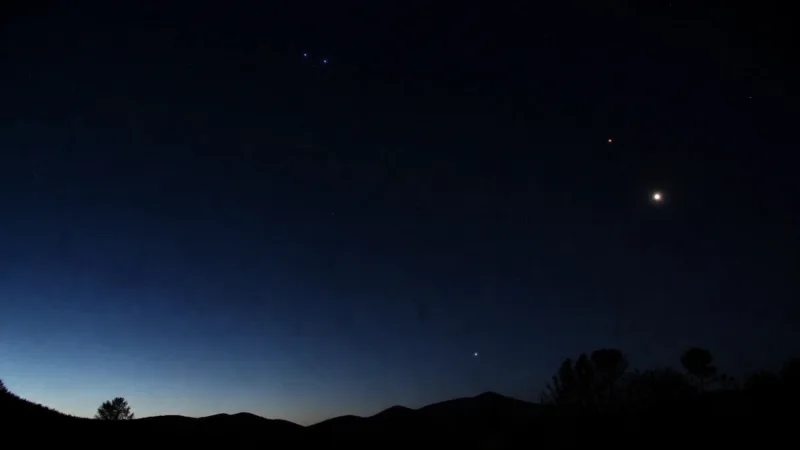
In November 2026 the planets split cleanly between dusk and dawn. After sunset there is Saturn, high in the south-east, with Neptune and Uranus for telescope and binocular users. Before sunrise there is almost everything else: Jupiter and Mars high in the south and passing within 1.2 degrees of each other on the 16th, Venus climbing back as the Morning Star and reaching its brightest on the 27th, and Mercury low in the south-east for the last ten days of the month. Altitudes below are for Dallas at civil dusk (about 5:50 PM) and civil dawn (about 6:30 AM); the planets page computes them for your city on any date.
Evening: Saturn
Saturn is the only bright planet in the evening sky. On November 1 it stands 22 degrees up in the south-east at dusk; by the 30th it is 42 degrees up as dusk comes earlier and the planet drifts west. It is highest, nearly 60 degrees in the south, around 10 PM early in the month and 8 PM by the end, and sets after midnight. At magnitude 0.9 to 1.0 it is fainter than usual because the rings are nearly edge-on this year, a thin line in a small telescope. The waxing gibbous Moon passes about 7 degrees from Saturn on the evening of November 20. The Saturn page has its height hour by hour.
Neptune, magnitude 7.8, is in the same part of the sky, 30 to 45 degrees up at dusk, a telescope object two months past opposition.
Evening and night: Uranus at opposition
Uranus reaches opposition on November 25 and is up all night, rising at dusk and standing 78 degrees high in the south at midnight. At magnitude 5.6 it is at the naked-eye limit from a dark site and easy in binoculars once you know where to look: in Taurus, about 5.5 degrees to the lower left of the Pleiades, roughly a third of the way from the cluster toward Aldebaran. A telescope at 100x shows a tiny grey-green disc that does not twinkle. The moonless first half of the month is the time to find it; it moves so slowly that it will still be there, about half a degree further west, in the bright-Moon week of opposition.
Dawn: Jupiter and Mars together
Jupiter, at magnitude -2.0 to -2.2, is the brightest object in the morning sky after Venus, and Mars, at magnitude 0.9 brightening to 0.5, is the orange point beside it. Both are in Leo near Regulus and both stand about 70 degrees high in the south at dawn all month. Mars moves east at two thirds of a degree a day and overtakes Jupiter on the 16th at 1.2 degrees; they are within 2 degrees from the 12th to the 20th. The pair also rises earlier each night, about 1 AM at the start of the month and 11 PM by the end, so late-evening observers get them too.
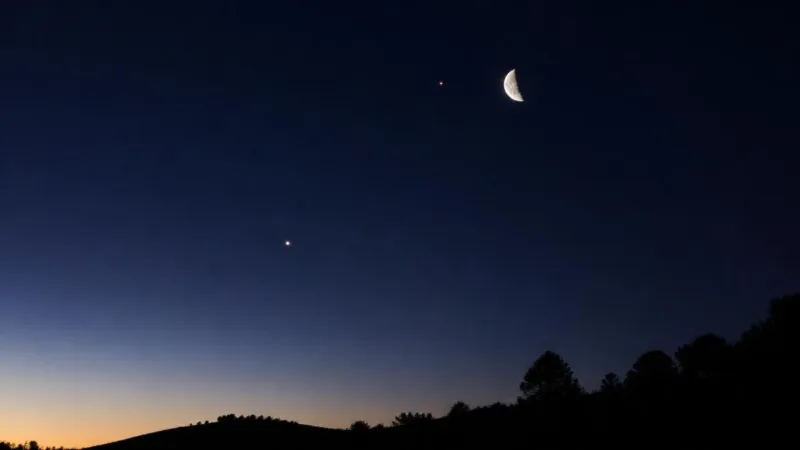
Two Moon visits bracket the month: on the morning of the 2nd the crescent Moon is a degree from Mars, and on the 30th it sits 2 degrees from Jupiter. Our guides to the November 2 grouping and the November 16 conjunction have the details, and the Jupiter and Mars pages have the numbers for your city.
Dawn: Venus and Mercury return
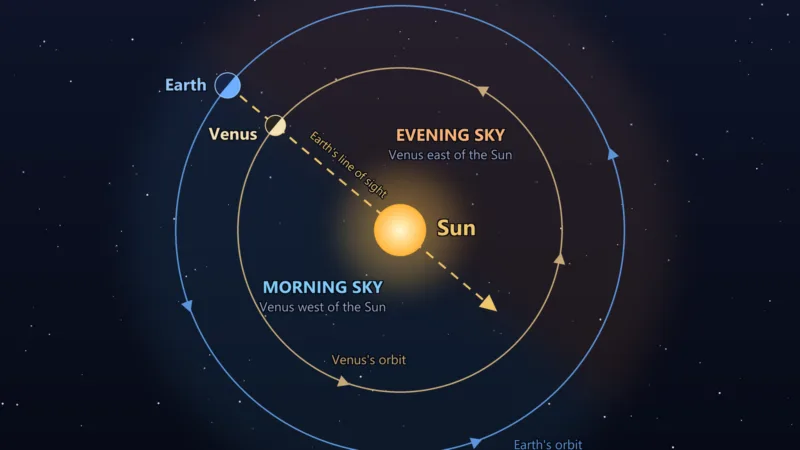
Venus passed between Earth and the Sun on October 23 and reappears low in the east at dawn in the first days of November: 8 degrees up at civil dawn on the 2nd, 15 degrees by the 7th, 24 by mid-month and 32 by the 30th. It brightens from magnitude -4.2 to -4.7, reaching greatest brilliancy around the 27th, when the crescent is 25 percent lit and about 42 arcseconds across, big enough to show its shape in steady binoculars. On the 7th the thin Moon and the star Spica join it in a tight triangle. Venus will dominate the morning sky until spring. The Venus guide explains the switch from evening to morning.
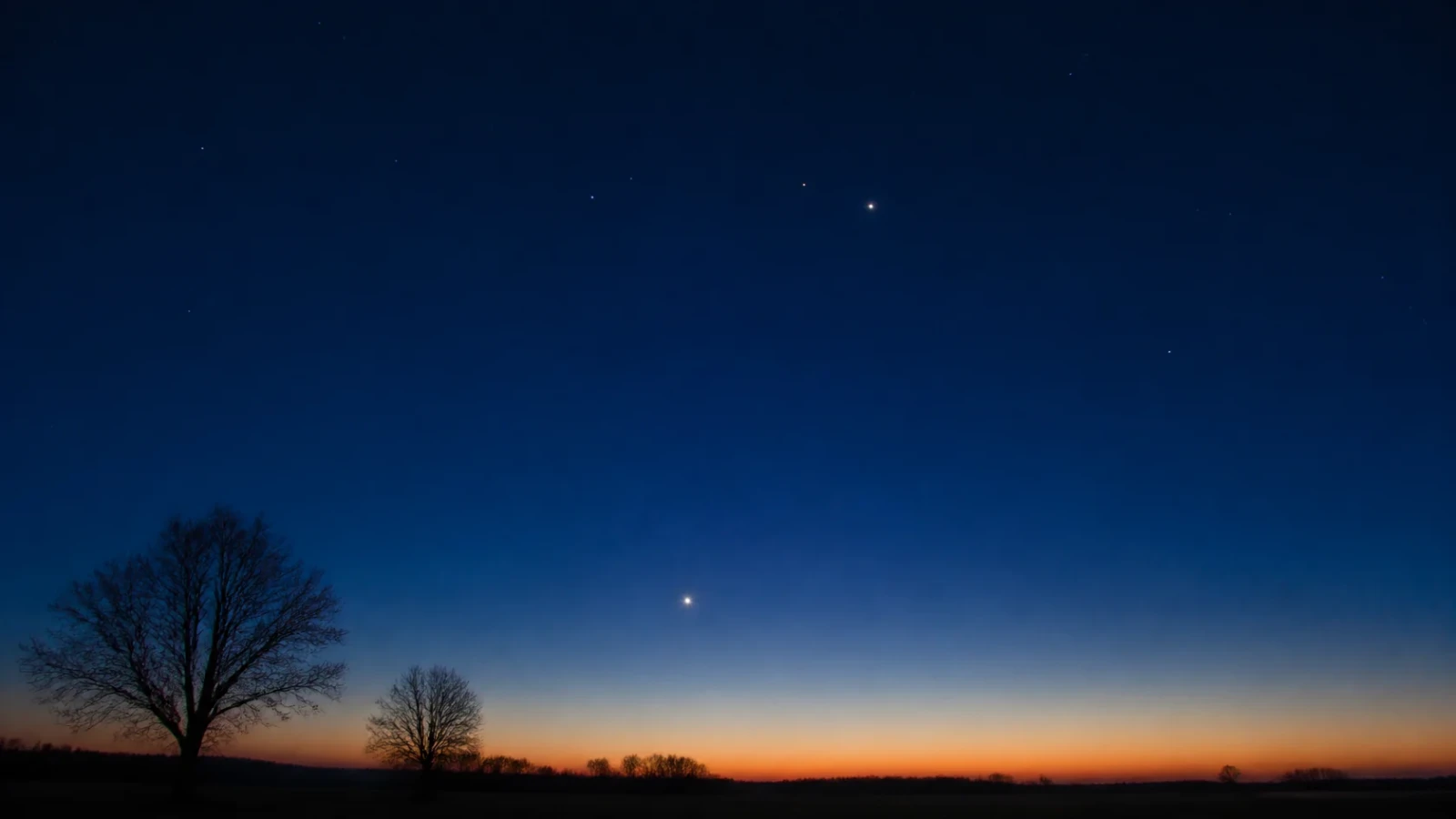
Mercury passes inferior conjunction on November 4 and then climbs into the dawn, reaching greatest elongation west on the 20th, 20 degrees from the Sun. From Dallas it is 13 degrees up at civil dawn from about the 16th to the 25th, at magnitude -0.5 to -0.6, below and to the left of Venus. This is one of the better morning showings of the year for the northern hemisphere because the ecliptic is steep at dawn in late autumn; look about 40 minutes before sunrise in the south-east, and use Venus as the signpost. From the southern hemisphere the apparition is poor, with Mercury low in the dawn glow.
Day by day: the month’s planet events
- November 2: Moon 1 degree from Mars at dawn; Moon 0.5 degrees from Jupiter at 22:50 UTC, an occultation from Australia and South-East Asia on the morning of the 3rd.
- November 4: Mercury at inferior conjunction, invisible.
- November 7: Moon, Venus and Spica within 2.5 degrees at dawn.
- November 16: Mars 1.2 degrees from Jupiter.
- November 20: Mercury at greatest elongation west, magnitude -0.5.
- November 25: Uranus at opposition, magnitude 5.6.
- November 27: Venus at greatest brilliancy, magnitude -4.7.
- November 30: Moon 2 degrees from Jupiter and 4 from Mars at dawn.
Looking ahead to December
Jupiter and Mars keep rising earlier and both head toward opposition early in 2027, Mars in February at magnitude -1.2. Venus stays brilliant at dawn. Saturn sinks into the evening twilight by the end of winter. The 2026 events calendar lists every pairing and opposition with times for your zone.