Five planets are on show in September 2026, but not all at once. Venus rules the early evening, Saturn owns the night, and Jupiter and Mars wait for the pre-dawn hours, with Mercury making a brief, low appearance for the tropics. Here is where each one is, how bright it looks, and when to go outside, based on this site’s positions for mid-September. Use the planets page to get the same report for your own city and tonight’s date.
Venus: the Evening Star, sinking
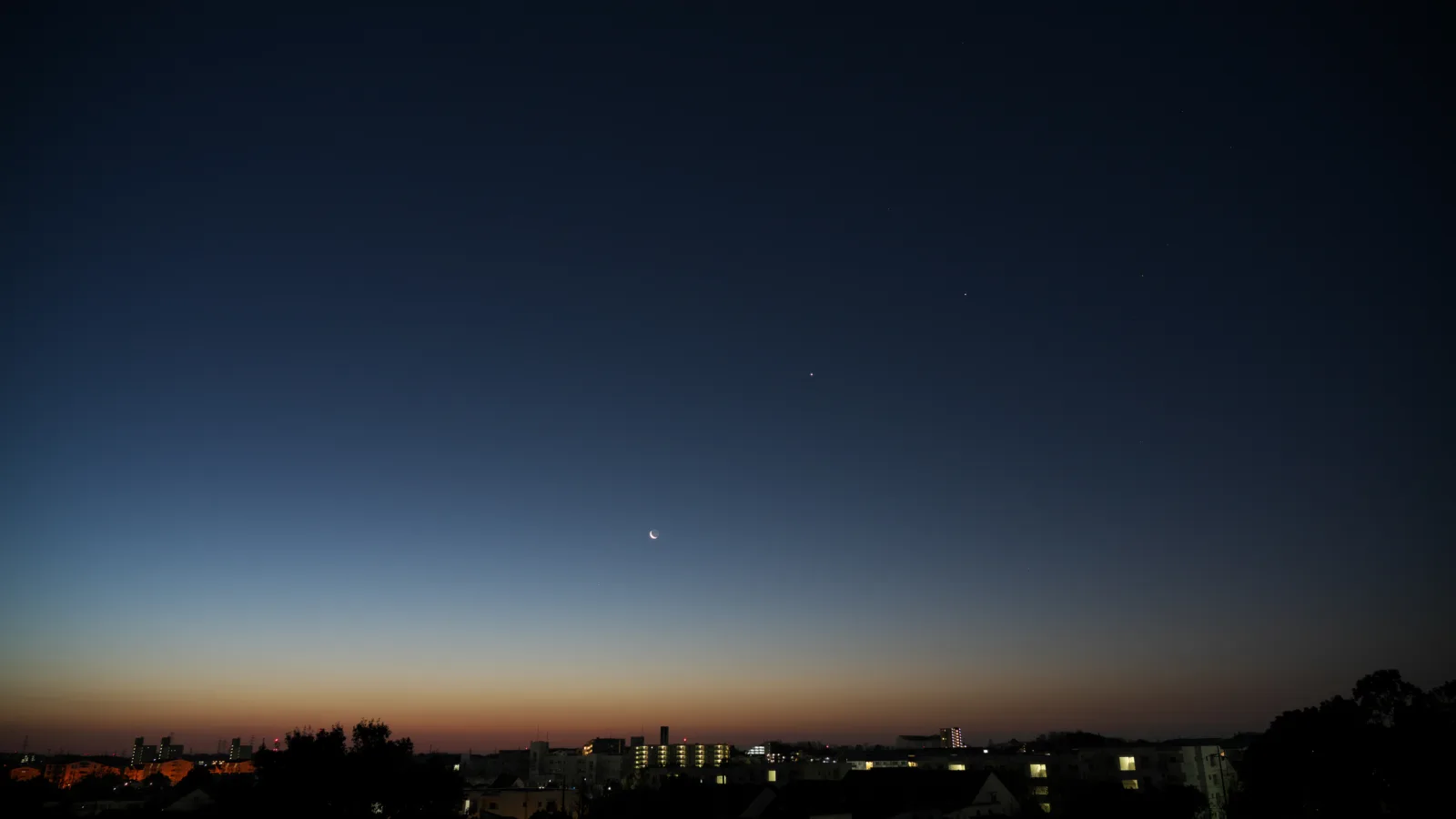
Venus is unmistakable after sunset at magnitude −4.5, brighter than anything in the night sky except the Moon. It passed its greatest distance from the Sun on August 15 and is now sliding back toward it, reaching inferior conjunction, when it passes between Earth and the Sun, on October 24. That means it sets earlier each evening. From Manila on September 15 it is still 22 degrees high in the south-west when twilight ends; from Dallas, closer to 11 degrees, so northern observers need a clear western horizon and should look soon after sunset. Through a telescope Venus is now a thick crescent, growing larger and thinner each week as it swings closer to Earth. Watch it on September 14, when a young crescent Moon passes just half a degree away.
Saturn: up all night, opposition on October 4
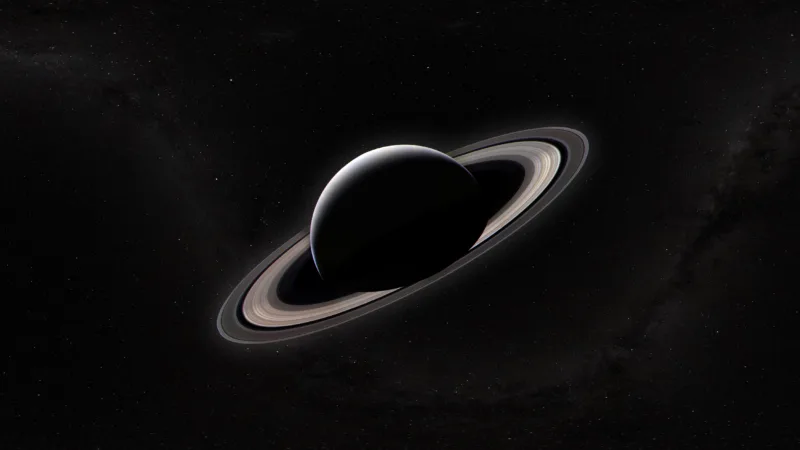
Saturn reaches opposition on October 4 at 14:04 UTC, so through September it rises around nightfall and is visible until dawn. At magnitude 0.7 it is a steady, cream-coloured point in Aquarius, well east of the summer Milky Way. From Dallas on September 15 it is 42 degrees high in the south-east by midnight; from Manila, 69 degrees, nearly overhead. This is the month to point a telescope at it. The rings, which were edge-on and almost invisible in 2025, have opened enough to show their shape again, and the largest moon, Titan, is easy in a small scope.
Neptune: opposition on September 26
Neptune, at magnitude 7.8, is never visible to the naked eye, but it reaches opposition on September 26 at 01:08 UTC and sits close to Saturn in the sky, which makes it easier to locate than usual. Sweep the region with binoculars and a chart and look for a faint blue-grey point that does not belong among the stars. Uranus, at magnitude 5.7, rises later in the evening and climbs high by dawn; from a dark site it is just visible without optical aid, and obvious in binoculars.
Jupiter: the morning giant
Jupiter passed behind the Sun on July 29 and is now well into the morning sky, rising in the small hours and standing about 30 degrees high in the east before sunrise from both Dallas and Manila. At magnitude −1.8 it is the brightest object in the pre-dawn sky. Its four Galilean moons line up beside it in any binoculars, changing position from night to night. Jupiter will climb into the evening sky through the autumn on its way to opposition in early 2027.
Mars: faint but high
Mars is in the morning sky too, higher than Jupiter at about 54 degrees before sunrise, but at magnitude 1.2 it is a modest orange point rather than a beacon. It passed conjunction with the Sun in January and is slowly brightening as Earth catches up with it, but its next opposition is not until February 19, 2027. Watch it drift toward Jupiter over the coming weeks; the two pass within about a degree of each other on November 16.
Mercury: for the tropics only, for now
Mercury is nominally an evening object, but from mid-northern latitudes it is too low in the twilight to see this month. From the tropics it stands about 6 degrees up in the west after sunset, a brief target for the sharp-eyed. Its greatest evening elongation comes on October 12, when it stands 25 degrees from the Sun, and that is the better time to try, especially from southern latitudes where the evening ecliptic is steep in October.
A quick planning table
- Evening (after sunset): Venus, low in the west; Saturn rising in the east.
- Midnight: Saturn high; Neptune nearby; Uranus rising in the east.
- Before dawn: Jupiter bright in the east; Mars above it; Saturn setting in the west.
The Moon threads through all of this: it passes Venus on September 14, reaches first quarter on September 18 and is full, the Harvest Moon, on September 26. In early October it visits Mars on the 5th, sits just 0.2 degrees from Jupiter on the 6th, and passes Venus and Mercury on the 12th. The events calendar has each of these with a countdown and a check of whether it is above your horizon.