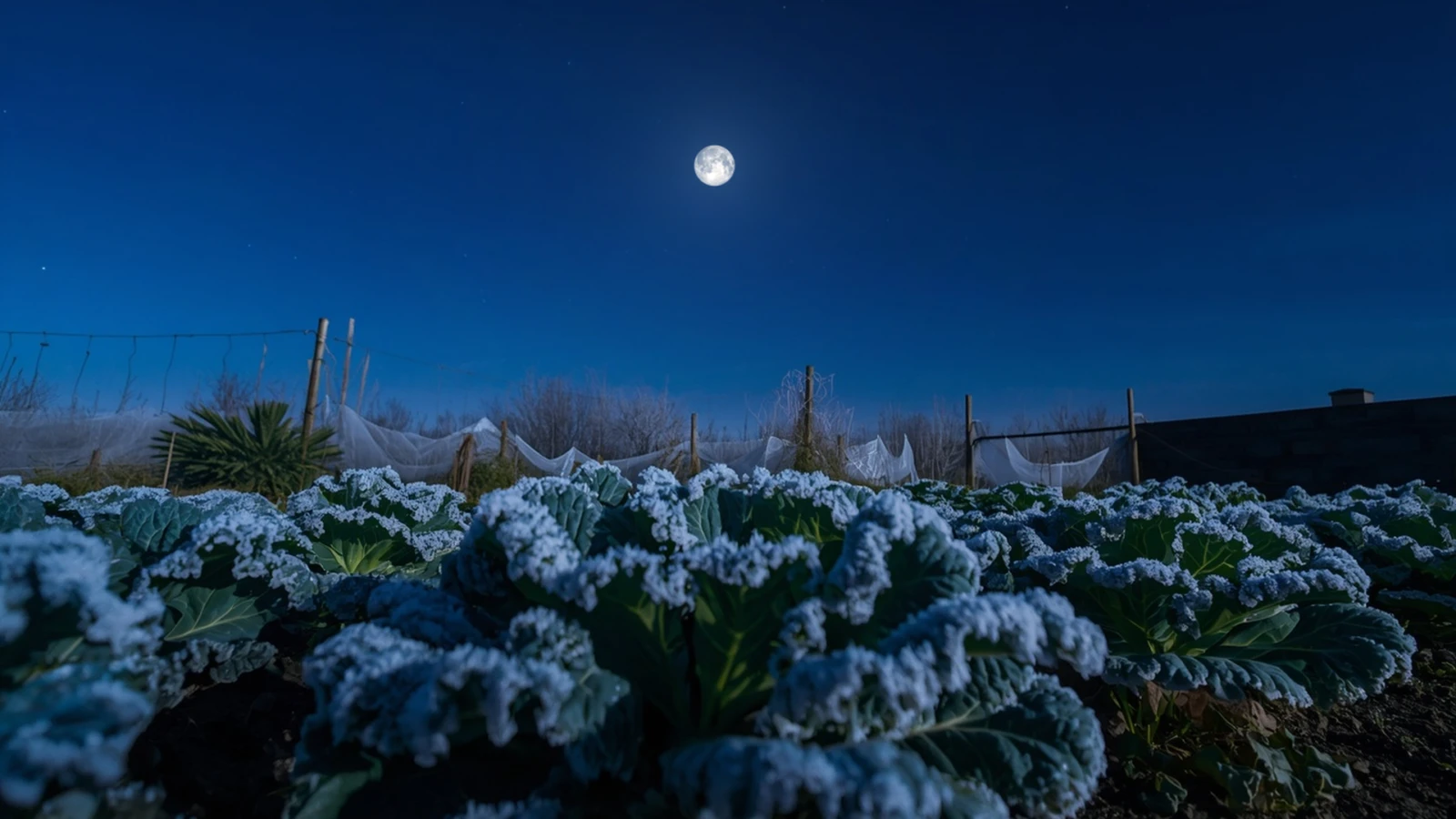
“Full moon, frost soon” is one of the oldest sayings in the garden, and this year it looks prophetic: the full Beaver Moon falls on November 24, two days after the average date of the first freeze in Dallas. Gardeners in colder places will already have had a white morning under a bright Moon and drawn the obvious conclusion. The Moon does not cause frost. But the saying survives because it points at something real, and knowing what that is will protect your plants better than any calendar.
Where the saying comes from
Most garden frosts are radiation frosts. After sunset the soil, the leaves and every other surface radiate the day’s heat out to space as infrared. Under cloud, most of that heat is absorbed and sent back down, and the night stays mild. Under a clear sky it is simply lost, and if the air is also still, so that no warmer air is stirred down from above, the ground and the plants can fall several degrees below the temperature the forecast gave.
So the recipe for frost is a clear, calm, dry night, and that is also the recipe for a brilliant Moon. Nobody remembers the full Moons hidden behind cloud, because nobody saw them and nothing froze. The ones that stay in the memory are the ones that lit a white lawn. Canadian climatologist David Phillips, who went through the records to test the saying, found almost as many frosts in one phase of the Moon as in any other, and suggested a better version: clear moon, frost soon.
Why the winter full Moon gets the blame
There is a second reason the full Moon in particular is linked with cold, and it is astronomical. A full Moon sits opposite the Sun in the sky, so when the Sun rides low, as it does in late autumn and winter, the full Moon rides high and stays up all night. The figures for Dallas from our engine:
- The Beaver Moon, night of November 23 to 24: above the horizon for 14.8 hours, from 4:25 PM to 7:15 AM, and 81 degrees high at midnight, nearly overhead. The Sun that day manages 37 degrees at noon.
- The Cold Moon, night of December 23: up for 15.2 hours and 84 degrees high, through a night 14 hours long.
- A midsummer full Moon, for comparison: up for under 10 hours and only about 30 degrees high at its best.
In the frost season, then, the full Moon is overhead, flooding the garden for the whole of a long night, at exactly the time of year when a long clear night is dangerous. In June it skims the southern horizon for a few hours and nobody has reason to connect it with anything.
Does the Moon itself change the temperature?
Hardly at all. Full moonlight is about 400,000 times weaker than sunlight, and it carries a correspondingly tiny amount of heat. The best-known measurement, a study of satellite temperature records published in Science in 1995, found the lower atmosphere about 0.02 degrees Celsius warmer at full Moon than at new Moon. The effect is in the wrong direction for the saying and far too small to feel, let alone to matter to a plant. No lunar phase will freeze or spare a tomato.
How to read a frost night
What does predict frost is the evening itself. Go outside at dusk and check:
- The sky. Clear from horizon to horizon, stars sharp, the Moon without a halo. Thin high cloud arriving overnight often saves a crop.
- The wind. Dropping to nothing. A steady breeze keeps the air mixed and the ground warmer; dead calm lets the cold settle.
- The forecast low. Official temperatures are measured 1.5 to 2 metres above the ground. On a clear, calm night the grass and low leaves can be several degrees colder than that, which is why frost is common with a forecast low of 33 to 36°F, 1 to 2°C, and why weather services issue frost advisories in that range.
- The air. Dry air cools faster than damp air. A dew-soaked evening is less risky than a crisp, dry one at the same temperature.
- Your ground. Cold air is heavy and flows downhill like water, pooling in hollows and against fences. Beds at the bottom of a slope freeze first; beds near a house wall or under a tree canopy freeze last.
- The length of the night. Cooling continues until sunrise. At Dallas the night of November 23 is 13.7 hours long, and the coldest moment is usually just before dawn.
A frost blackens tender leaves at around freezing. A freeze, 32°F or 0°C in the air, kills tender plants outright, and a hard freeze, 28°F or minus 2°C and below, damages even many hardy ones.
What to do before one
- Cover before sunset. The aim is to trap the heat still in the soil, so the cover should reach the ground on all sides. Frost cloth, old sheets and blankets all work; a light cloth buys 2 to 6°F and a heavy one up to 8 or 10. Keep plastic from touching leaves, and take covers off in the morning.
- Water the day before. Moist soil stores more of the day’s warmth than dry soil and gives it back overnight. Damp, not waterlogged.
- Move what can move. Pots go against a south-facing wall, under a porch or indoors.
- Pick the tender crops. Tomatoes, peppers, basil, beans and squash will not survive a frost on the plant. Green tomatoes ripen indoors.
- Leave the hardy ones. Kale, collards, Brussels sprouts, carrots and parsnips turn starch into sugar as a natural antifreeze and taste sweeter after a frost.
- Mulch the roots. A layer of straw or leaves over garlic, carrots and newly planted bulbs keeps the soil from freezing and thawing.
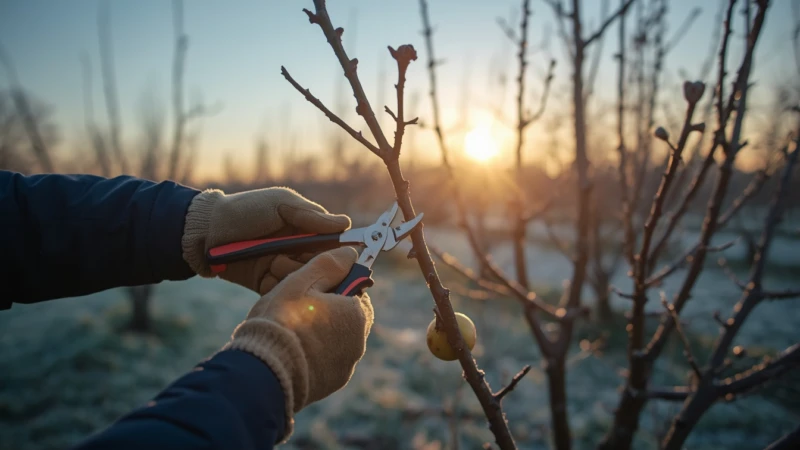
- Do not prune the damage. Blackened growth shelters what is beneath it. Leave it until the risk of frost has passed, as our pruning guide explains.
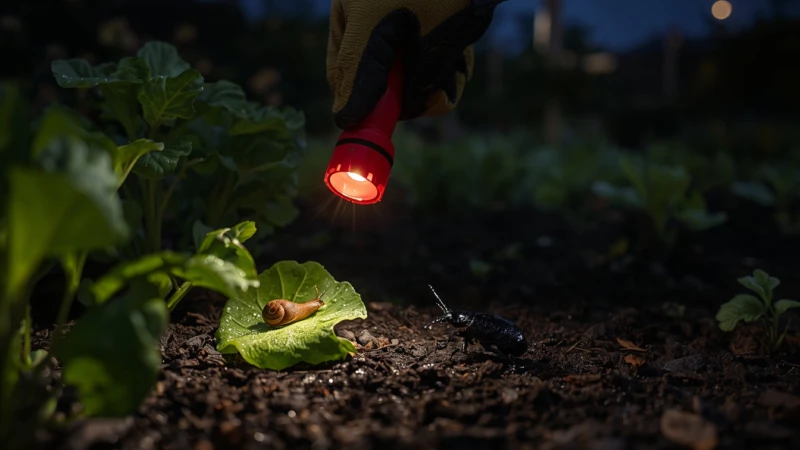
A bright Moon does help with one thing. It gives enough light to check the covers at bedtime and to see what else is out in the beds, as in our guide to what is eating your garden at night.
Frost and the Moon calendar this winter
The National Weather Service puts the average first freeze at Dallas-Fort Worth on November 22, in records going back to 1898; the earliest came on October 22 and the latest on January 4. The full Moons of the frost season, in Central Time, are the Beaver Moon on Tuesday, November 24 at 8:53 AM, the Cold Moon on Wednesday, December 23 at 7:28 PM, the Wolf Moon on Friday, January 22 at 6:17 AM and the Snow Moon on Saturday, February 20 at 5:23 PM. The names say plainly enough what the people who coined them expected of those nights.
In the traditional planting calendar the week after full Moon is the root-crop window, November 25 to 30 this month and December 24 to 30 next, and in cold-winter gardens that is the last call for garlic, bulbs and bare-root trees before the ground hardens. The fourth quarter that follows, December 1 to 8, is for mulching, clearing and tending. The gardening calendar has every day marked for your city, and our look at whether gardening by the Moon works covers what trials have and have not found. Use the Moon as the reminder to look up at dusk. If you can see it clearly, and the air is still, cover the tomatoes.