Saturn reaches opposition on Sunday, October 4, 2026, at 14:04 UTC, which is 9:04 AM Central Time. Around that date the planet is closest to Earth, brightest for the year at magnitude 0.6, and visible from dusk to dawn. The nights of October 3, 4 and 5 are the peak, but Saturn looks essentially the same for two or three weeks either side, so any clear night in early October will do. This is also the first opposition since the rings turned edge-on in 2025, and they have opened up enough to show properly again. Times here are for Dallas; our Saturn opposition page converts them to your city.
What opposition does for Saturn
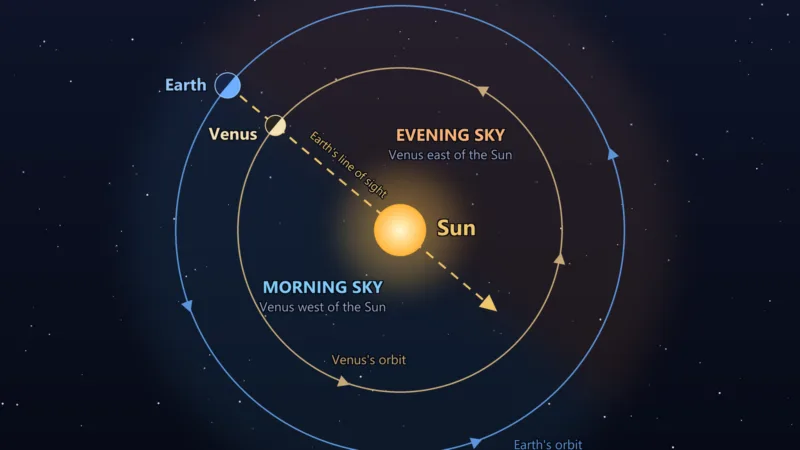
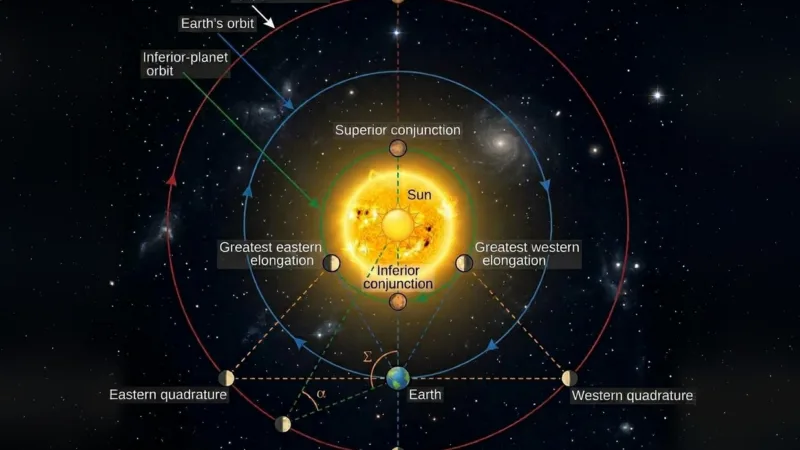
At opposition the Earth sits directly between the Sun and Saturn. Three things follow. Saturn is at its closest for the year, so it appears largest in a telescope, just under 20 arcseconds across the disc. It rises as the Sun sets and sets as the Sun rises, so it is up all night. And it is fully lit from our point of view, with no shadow of the planet falling on the rings, which is why the rings look unusually bright for a few nights around the exact date. Astronomers call that brightening the opposition surge, and it is subtle but real: Saturn looks a touch more brilliant this week than it will in November.
Where and when to look
Saturn is in Pisces, a faint constellation, but you will not need it: Saturn is the brightest object in that part of the sky and shines with a steady, pale yellow light that does not twinkle the way stars do. From Dallas it is low in the east at dusk, 52 degrees high in the south-east by midnight, and about 9 degrees above the western horizon at dawn. The best telescope views come when it is highest, between roughly 10 PM and 2 AM, because you are looking through the least air.
The Moon helps this week. It reaches last quarter on October 3 and rises after midnight, so the evening hours are moonless on the nights around opposition. Neptune hunters get a bonus: Neptune sits about 9 degrees west of Saturn and is also near its best, though it needs binoculars.
The rings in 2026
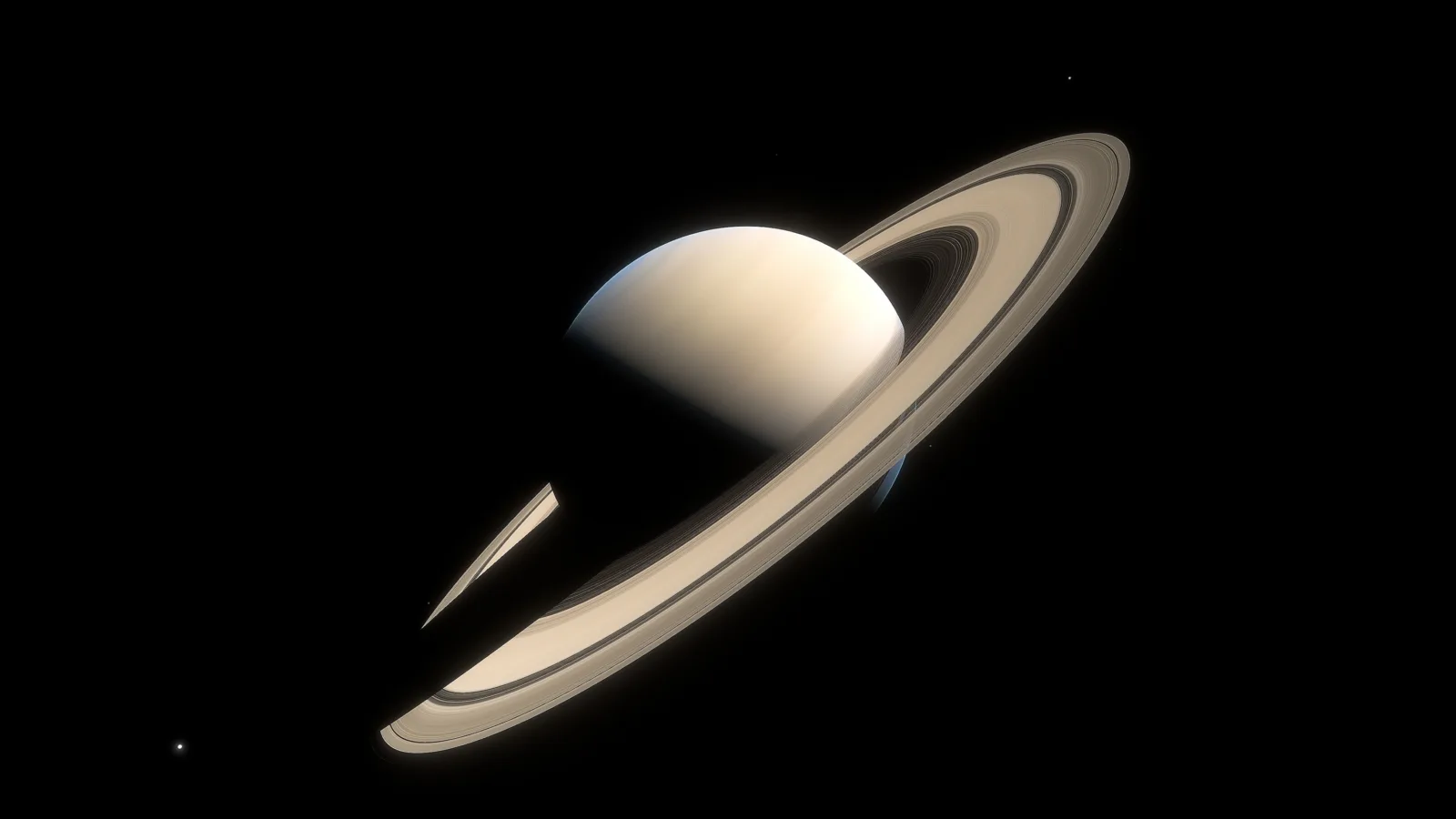
In March 2025 Earth crossed Saturn’s ring plane and the rings vanished into a thin line for weeks. Since then the tilt has been opening again, and by this opposition the rings are inclined about 7 degrees toward us. That is still a shallow angle compared with the wide-open views of 2017, when the tilt reached 27 degrees, but it is enough to show the rings as a distinct ellipse around the planet with dark sky visible between ring and globe. Under steady air a 4-inch telescope at 150 times magnification shows the Cassini Division, the dark gap that separates the outer A ring from the brighter B ring. The tilt keeps increasing for the next several years, so each opposition from here on gives a slightly better view.
What different equipment shows
- Naked eye: a bright, cream-coloured “star” that does not twinkle. Watch it over a few weeks and you will see it barely move against the stars, which is how the ancients knew it was a wanderer.
- Binoculars, 10×50: Saturn looks oval rather than round. That elongation is the rings, unresolved but clearly there. Titan, its largest moon, shows as a faint point nearby.
- Small telescope, 60 to 90 mm at 50 to 75 times: the rings separate from the globe. This is the view that makes people gasp at star parties.
- 4 to 8 inches at 150 to 250 times: the Cassini Division, cloud bands on the globe, the planet’s flattened shape, and three or four moons strung out along the ring plane. Titan is the bright one; Rhea, Tethys and Dione are fainter and closer in.
Tips for the best view
- Set the telescope outside 30 to 45 minutes before you look so its optics reach air temperature. A warm scope gives a boiling, blurred image.
- Look for moments of steady air. Saturn will shimmer and then, for a second or two, snap sharp. Those seconds are when you see the Cassini Division.
- Do not overdo the magnification. On a typical night 150 to 200 times is the useful limit; more just enlarges the blur.
- For photographs with a phone, hold the camera to the eyepiece and use a short video rather than a single frame; the best frames can be picked out later.
- Check the planets page for Saturn’s altitude at any hour from your city, and pick a night when it is above 40 degrees.
After opposition
Saturn stays well placed in the evening sky through the end of the year, rising earlier each night, so October and November are the comfortable months for early-evening viewing without staying up late. The next opposition falls in mid-October 2027, with the rings a little more open again. And if the outer planets appeal, Uranus follows with its own opposition on November 25, bright enough for binoculars.