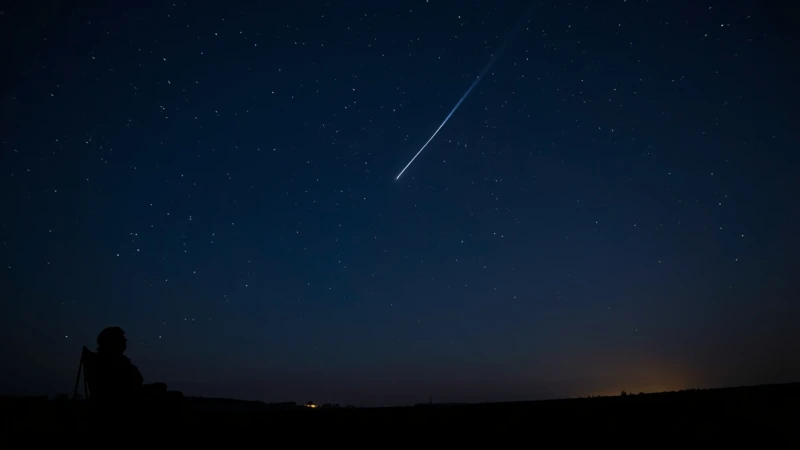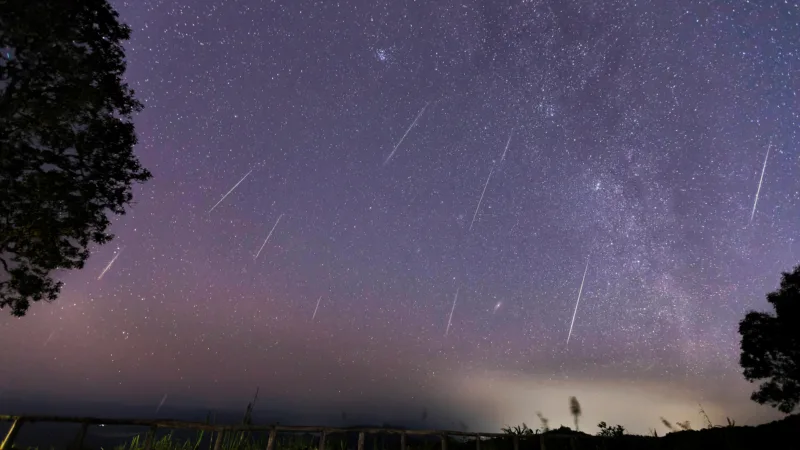
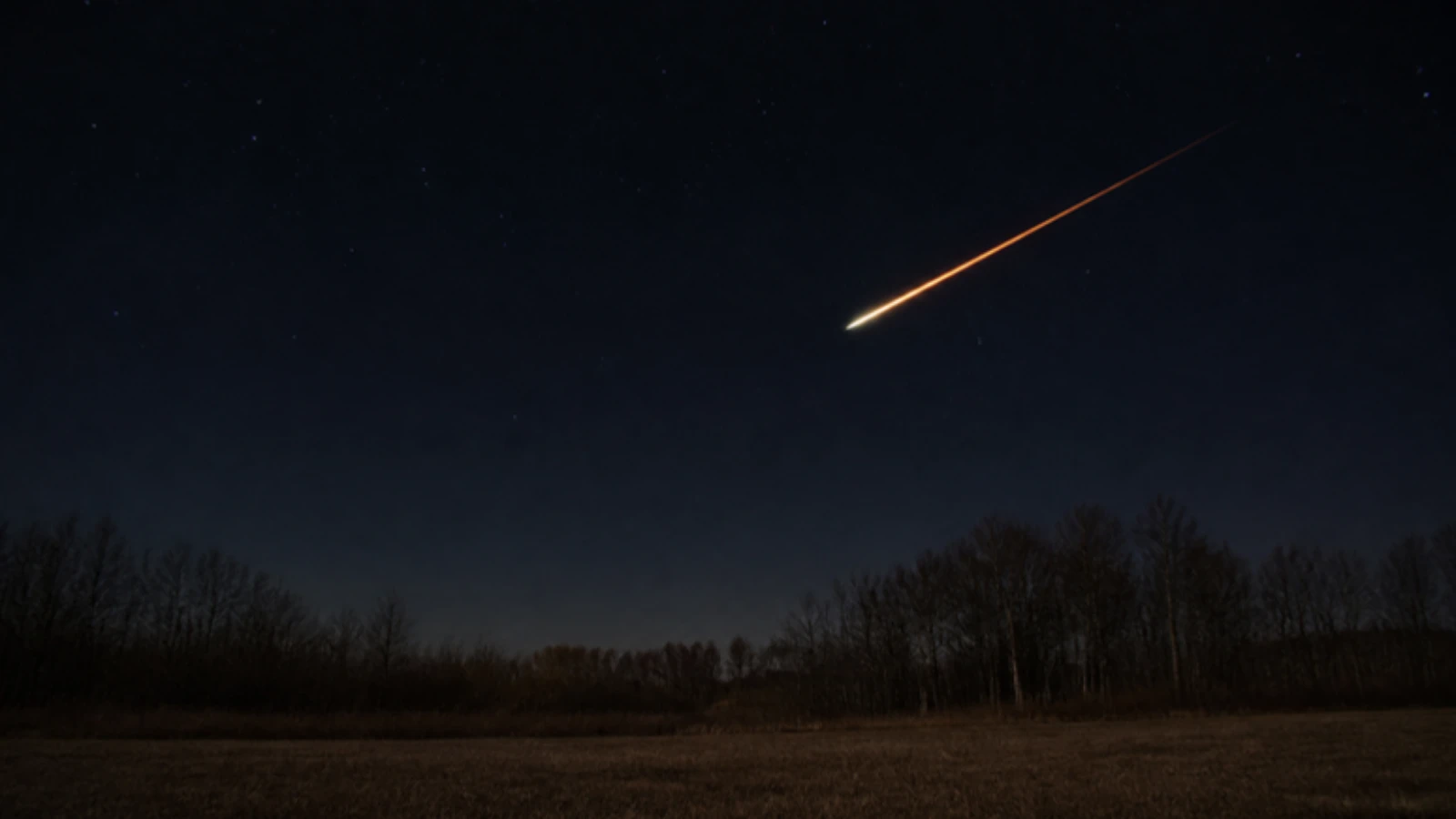
The Taurid meteor showers peak in the first half of November 2026 under a near-perfect Moon: the Southern Taurids around Thursday, November 5, and the Northern Taurids around Thursday, November 12, with new moon between them on the 9th. The Taurids never produce many meteors, five an hour at best from each branch, but what they lack in numbers they make up in size. These are the slowest meteors of the year and the ones most likely to flare into a fireball, which is why the two weeks around their peaks are called fireball season. This guide gives the dates, the best hours, what to expect from a city, and why scientists are paying the Taurids unusual attention.
Dates and the Moon
- Southern Taurids: active from September 9 to November 20, peaking around November 5. Our calendar puts the peak at 09:58 UTC on the 5th (3:58 AM Central); other forecasters place it in the early hours UTC of the same date. The Moon is a 13 percent crescent that rises at 3:17 AM in Dallas, so the whole evening and most of the night are dark.
- Northern Taurids: active from October 20 to December 10, peaking around November 12, with some forecasts as early as the 9th. The Moon is a 9 percent crescent that sets at 7:51 PM, leaving the night moonless.
- The overlap: both branches are active together from late October to mid-November, so on any clear night in that window you are watching both, for a combined rate of up to about 10 an hour under a dark sky. The Southern and Northern Taurids pages give the peak times in your time zone.
When and where to look
Unlike most showers, the Taurids do not make you wait until 3 AM. The radiants sit in Taurus, between the Pleiades and the Hyades, which rises in the east by about 7 PM in early November and is high in the south by 1 AM. From Dallas the best window is roughly 10 PM to 2 AM, when the radiant is high and the Moon is down, but a bright Taurid can appear from early evening onward. Face east or south-east, keep the radiant off to one side rather than straight ahead, and take in as much sky as you can; a reclining chair is the best piece of equipment you own.
From a town you might see one or two an hour. The compensation is that Taurid fireballs, the ones that matter, are bright enough to show through light pollution and even through thin cloud. The shower is also well placed for the southern hemisphere, where Taurus rides high in the spring evening sky.
Why the Taurids throw fireballs
Taurid meteors hit the atmosphere at about 27 kilometres per second, less than half the speed of the Leonids. Slow meteors burn longer and lower, so they look like lazy orange streaks rather than quick white flashes. The stream also contains an unusual share of larger particles, pebbles rather than sand grains, and a pebble entering at that speed produces a fireball that can outshine Venus and cast shadows. The record is impressive: the Taurids are responsible for a disproportionate number of the bright fireballs reported each autumn, and in some years, 2005, 2015 and 2022 among them, Earth passed through a denser clump of the stream and fireball counts jumped.
The parent is Comet 2P/Encke, which orbits the Sun every 3.3 years, the shortest period of any known comet. The Taurid stream is old and wide, spread by thousands of years of planetary tugs into two overlapping branches, which is why the showers last two months and have such vague peaks.
Is 2026 a swarm year?
No. The enhanced fireball years come when Earth passes through the “Taurid resonant swarm”, a denser region of the stream held together by a 7:2 resonance with Jupiter, and that happens on a seven-year rhythm. The last swarm passage was 2022; the next close ones are forecast for November 2032 and June 2036, and a study published in October 2025 proposed using those two approaches to search for larger objects that might be hiding in the swarm. For 2026 expect a normal year: a handful of meteors an hour, with a genuine chance of a fireball on any clear night in the first fortnight of November.
A dark window for everything else
With no Moon between about the 5th and the 13th, these are also the best nights of the month for the Andromeda Galaxy overhead, the Pleiades and Double Cluster in the east, the winter Milky Way rising after midnight, and Uranus near opposition a few degrees from the Pleiades. If a Taurid night is clear, it is worth staying out for all of it. Our meteor photography guide covers camera settings; for this shower set the camera to take continuous 20-second frames and let it run, since the one fireball that comes will not announce itself.
Later in the month
The Leonids follow on the night of November 17 to 18, fast and faint where the Taurids are slow and bright, with a first-quarter Moon setting around midnight. The Geminids in December are the year’s strongest shower. The meteor shower calendar has every peak with its Moon phase, and the moon calendar gives moonrise and moonset for any night from your city.