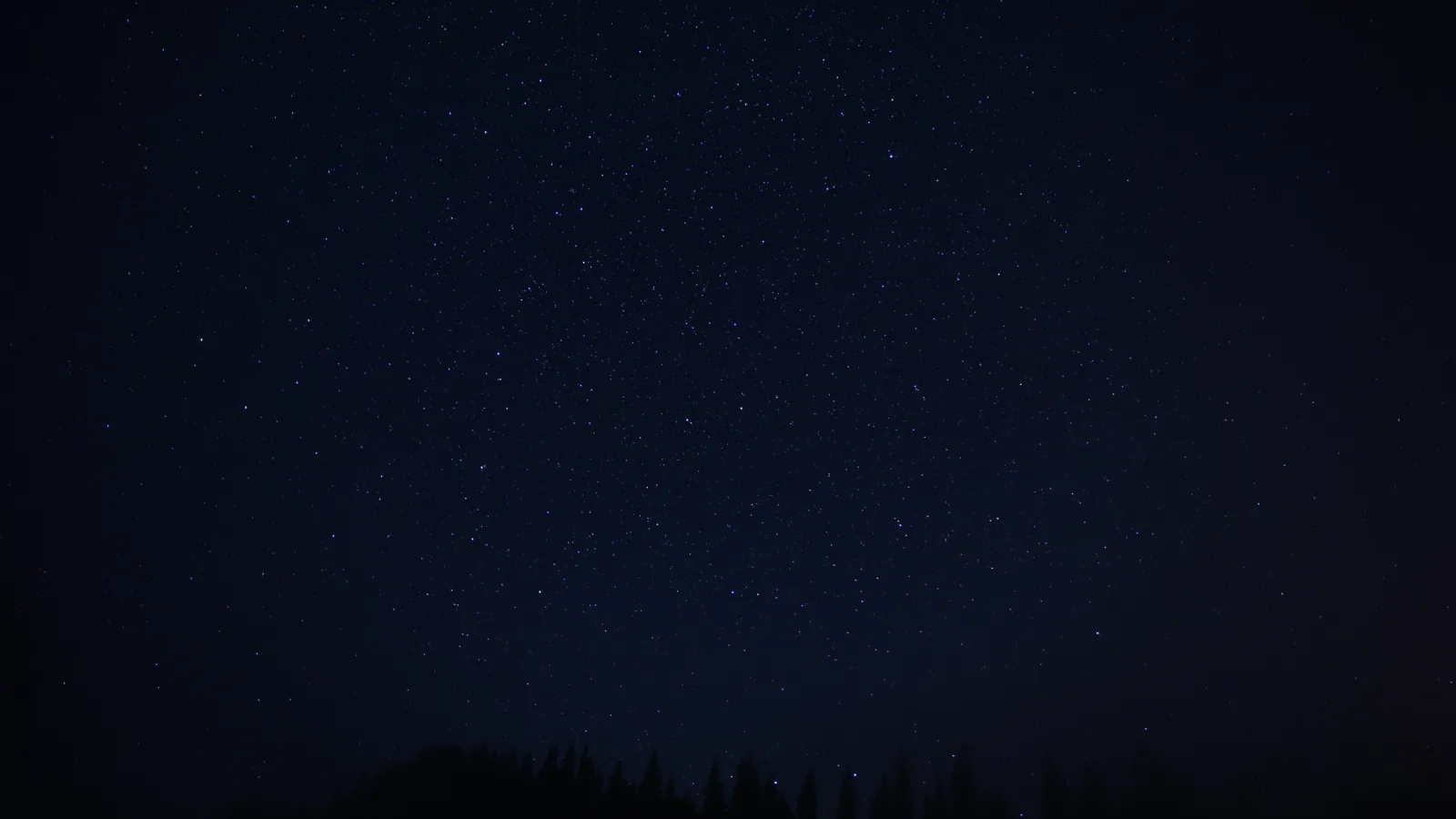
The new moon of October 2026 falls on Saturday, October 10, at 10:50 AM Central Time (15:50 UTC). For stargazers the exact minute matters less than the week around it: from about October 5 to October 13 there is no Moon in the evening sky at all, which makes these the darkest nights of the month and the best for the Milky Way, faint galaxies and the Draconid meteor shower. Times below are for Dallas; our October new moon page converts them to your city, and the moon calendar gives moonrise and moonset for every night.
Why new moon is the stargazer’s moon
At new moon the Moon sits between Earth and the Sun. Its lit side faces away from us and it rises and sets with the Sun, so it is in the daytime sky and out of the night sky completely. Moonlight is the strongest natural light pollution there is: a full Moon washes out the Milky Way and hides all but the brightest meteors, and even a half Moon costs you the faint stuff. Around new moon the sky is as dark as your location allows from dusk to dawn. That is why observatories schedule their faint-object work for “dark time” and why meteor forecasts always mention the Moon’s phase. If you want to know why the Moon goes through this cycle at all, our phases explainer covers it.
The dark-sky window, night by night
The useful window opens before the new moon itself, once the waning crescent rises late enough to leave the evening alone, and closes a few days after, when the young crescent starts setting well after dark.
- Saturday, October 3: last quarter at 8:25 AM. The half Moon rises after midnight, so evenings are already dark.
- Monday, October 5: 27% crescent, rising at 2:05 AM. Dark until then.
- Wednesday, October 7: 10% crescent, rising at 4:20 AM. Effectively a moonless night.
- Thursday, October 8: 4% crescent, rising at 5:23 AM, just before dawn. Draconid peak night.
- Saturday, October 10: new moon at 10:50 AM. Fully dark all night.
- Monday, October 12: 5% crescent, setting at 7:54 PM. Still dark from about 8:30 PM.
- Wednesday, October 14: the crescent now sets after 9 PM and grows each evening; the window is closing.
Astronomical darkness, when the Sun is 18 degrees below the horizon and the sky is fully dark, begins around 8:25 PM in Dallas this week and lasts until about 5:30 AM.
What to look for
The Draconids, October 8
The Draconid meteor shower peaks on October 8, and this year it has the moonless sky it needs. It is a minor shower, up to about 10 slow meteors an hour, but unlike most showers it is best in the evening rather than after midnight, because the radiant in Draco is highest as darkness falls. Face north-west from about 8:30 PM. Our Draconids guide has the full plan.
The Milky Way
In early October the summer Milky Way still arches from the south-west, through Sagittarius and the Scutum star cloud, overhead through Cygnus, and down to Cassiopeia in the north-east in the first hours of darkness. From a rural site it is obvious to the naked eye; from the suburbs binoculars bring out the star clouds. This is the last good month to see the brightest part before it sets earlier each evening.
The Andromeda Galaxy
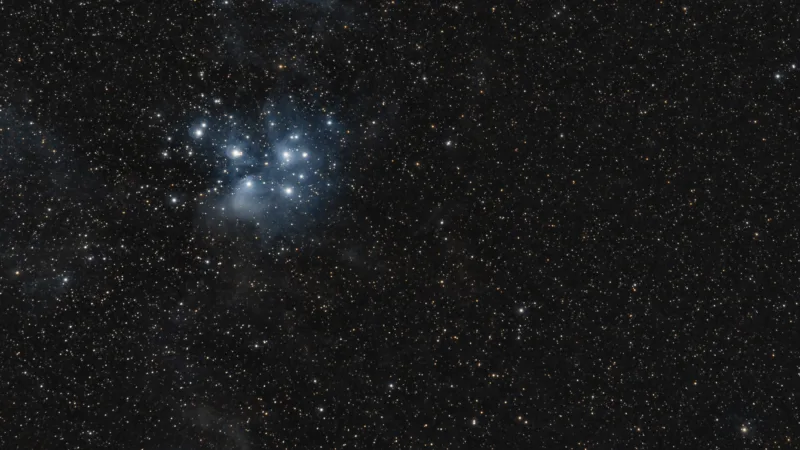
M31, the Andromeda Galaxy, is the most distant thing you can see without optics, 2.5 million light years away, and it needs a dark sky to show as the faint smudge it is. It is high in the east by 10 PM and nearly overhead after midnight this month. Our Andromeda guide shows the star-hop to find it.
Saturn and Neptune
Saturn is just past its October 4 opposition and high in the south-east by midnight, with Neptune nine degrees to its west. Neither needs a dark sky, but Neptune, at magnitude 7.8, is much easier to find in binoculars without moonlight.
A supermoon you cannot see, and a Black Moon that is not
This new moon is an ordinary one: 387,600 km from Earth, neither a supermoon nor a micromoon, and the only new moon of the month, so no Black Moon. It does not cause an eclipse either, because the Moon passes clear of the Sun’s disc. The nearest solar eclipse is in February 2027. If the new moon has a visible effect, it is on the tides: spring tides, the highest and lowest of the month, follow a day or two after.
After the new moon
Look west after sunset on October 11 and 12 for the young crescent. On the 12th it is two days old and sits about 3 degrees from Mercury, very low in the west-south-west, with earthshine glowing faintly on its dark side. The Moon then climbs through first quarter on October 18 to the Hunter’s Moon, full at 11:11 PM Central Time on October 25 (October 26 in UTC and in Europe). The next new moon is November 9. Every one for the year, with its dark-sky window, is on the 2026 new moon calendar.