This is the dark week of November: the waning crescent Moon thins from 40 percent on Monday to nothing by Sunday, rising later each morning and leaving the evenings moonless. That suits the Southern Taurid meteor shower, which peaks on Thursday, and the faint sights of autumn. Before dawn the crescent visits Mars and Jupiter on Monday and Venus on Saturday. Times below are for Dallas in Central Standard Time, now that the clocks have gone back; every page linked here converts them to your city.
The Moon: waning crescent to new
- Monday, November 2: 40 percent lit, rising at 12:06 AM and setting at 1:57 PM.
- Wednesday, November 4: 21 percent, rising at 2:16 AM.
- Thursday, November 5: 13 percent, rising at 3:17 AM.
- Saturday, November 7: 3 percent, rising at 5:18 AM, beside Venus.
- Sunday, November 8: a hair under 1 percent, rising at 6:19 AM half an hour before the Sun; new moon follows at 1:02 AM on Monday the 9th.
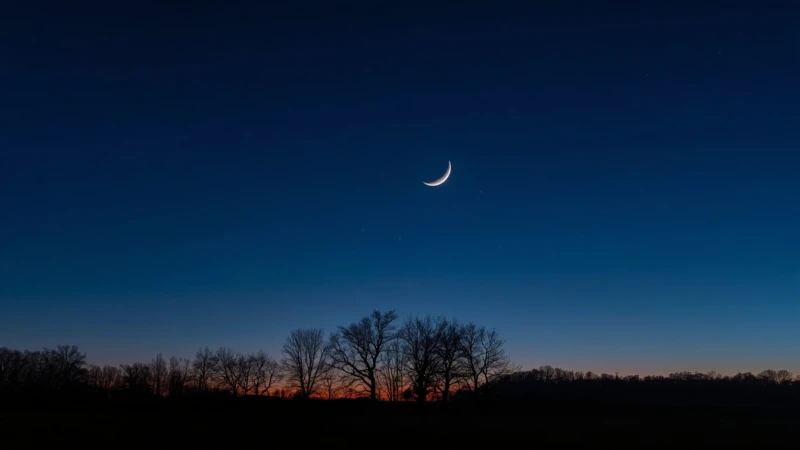
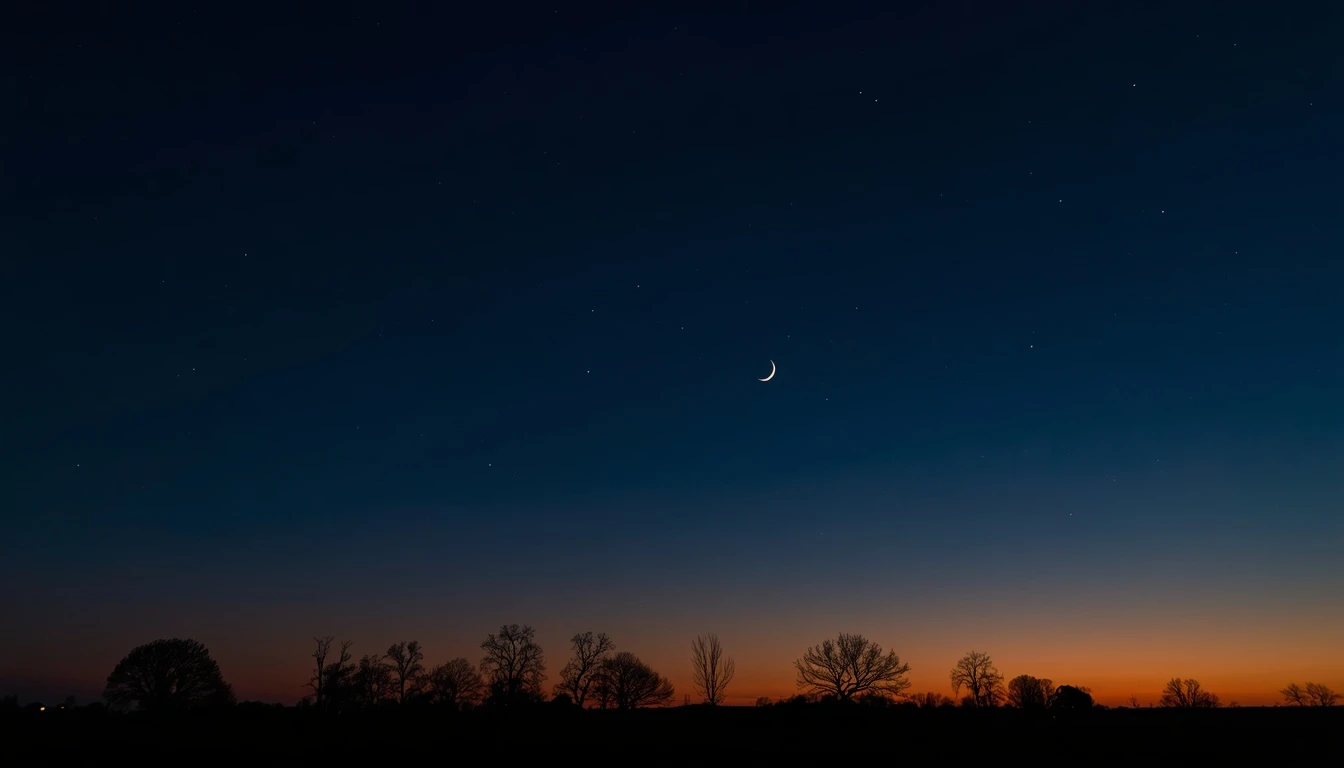
Each morning the crescent is thinner, lower and later, with earthshine lighting the dark side more clearly as the lit sliver shrinks; Thursday to Saturday are the mornings for it, with the Moon 20 degrees up in the east by civil dawn. The moonrise delay has settled back to about an hour a night after the big swings of the last fortnight, as our guide on why the Moon rises later each night explains. Sunset is at 5:35 PM on Monday and 5:30 PM on Sunday, with the sky fully dark by 7 PM.
Monday morning: the Moon, Mars and Jupiter
At 6 AM on Monday the crescent Moon is 1.3 degrees from Mars, with Jupiter 6 degrees further on and Regulus beyond, 60 to 70 degrees high in the south-east. On Tuesday morning the thinner Moon sits beside Regulus. From Australia and South-East Asia the Moon passes in front of Jupiter on the morning of the 3rd. Our guide to the grouping has the hour-by-hour view and the occultation details.
The planets themselves are worth following all week. Mars and Jupiter are 5.4 degrees apart on Monday morning and 3.1 degrees by Sunday, high in the south at 6 AM at magnitudes 0.9 and -2.0, closing on their November 16 conjunction; they rise around 1 AM, so late-night observers see them low in the east. Mercury passes inferior conjunction on Wednesday and is out of sight until mid-month. Our conjunction guide has the day-by-day separations.
Thursday night: the Southern Taurids peak
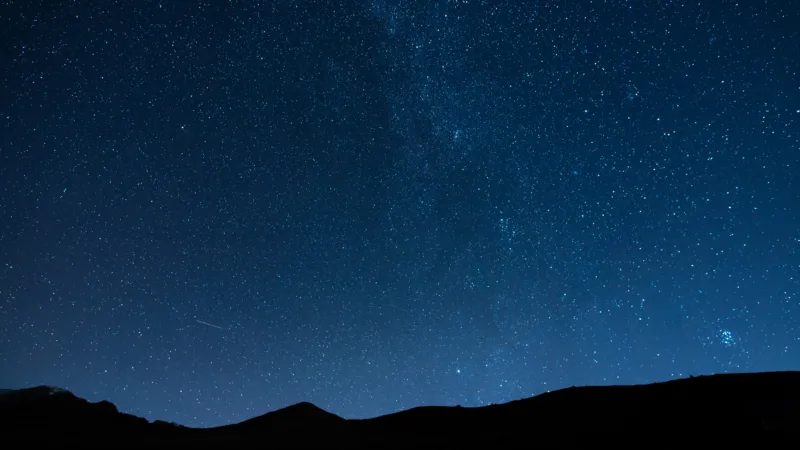
The Southern Taurid meteor shower peaks on Thursday, November 5, with the radiant in Taurus up from early evening and highest around 1 AM, and the 13 percent Moon not rising until 3:17 AM. Rates are only about five an hour, but Taurids are slow and bright, and this is the fortnight of the year when a fireball is most likely. The Northern Taurids are active too and peak next week. Our Taurid guide has the best hours and why the stream throws fireballs; the Southern Taurids page gives the peak time for your zone.
Saturday morning: Venus, the Moon and Spica
Venus is back in the dawn sky, 8 degrees up at civil dawn on Monday and 15 degrees by Saturday, blazing at magnitude -4.3 and brightening. On Saturday the 7th the 3 percent crescent Moon rises at 5:18 AM and stands a degree from Venus, with the star Spica a degree and a half further on: all three fit in one binocular field, with earthshine on the Moon’s dark side. Look low in the south-east between 5:45 and 6:20 AM. The event page gives the moment for your city; from Asia and Australia the closest moment falls in daytime, and on the mornings of the 7th and 8th local time the Moon sits about 6 degrees either side of Venus.
All week: dark evenings for Saturn and the deep sky
Saturn is 22 to 26 degrees up in the south-east at dusk and nearly 60 degrees high in the south around 10 PM, at magnitude 0.8, with Neptune nearby for telescopes. With no Moon in the evening this is the week for the Andromeda Galaxy overhead, the Double Cluster and the Pleiades in the north-east, and for Uranus, magnitude 5.6 in binoculars about 5.5 degrees to the lower left of the Pleiades, three weeks from its opposition. By 10 PM the Pleiades are high in the east with Taurus and the Taurid radiant below them, and Orion clears the horizon, the first proper look at the winter sky. The Saturn page has its altitude at any hour.
Looking ahead
Monday, November 9: new moon, and the darkest nights of the month continue through the 13th. Thursday, November 12: the Northern Taurids peak with a 9 percent Moon that sets by 8 PM. Monday, November 16: Mars passes 1.2 degrees from Jupiter at dawn; the Lunar X is visible that evening from Europe. Tuesday and Wednesday, November 17 and 18: the Leonids before dawn with the first-quarter Moon setting around midnight. The November guide has the whole month, and the gardening calendar marks this waning-crescent week as the traditional time to rest the soil, weed and prune.