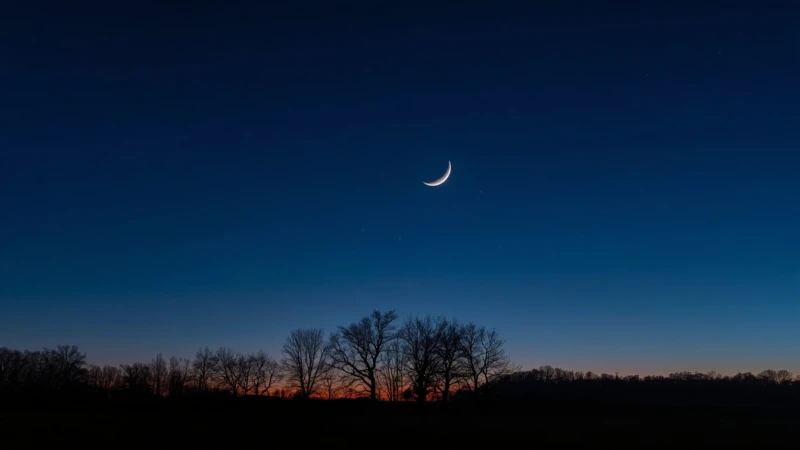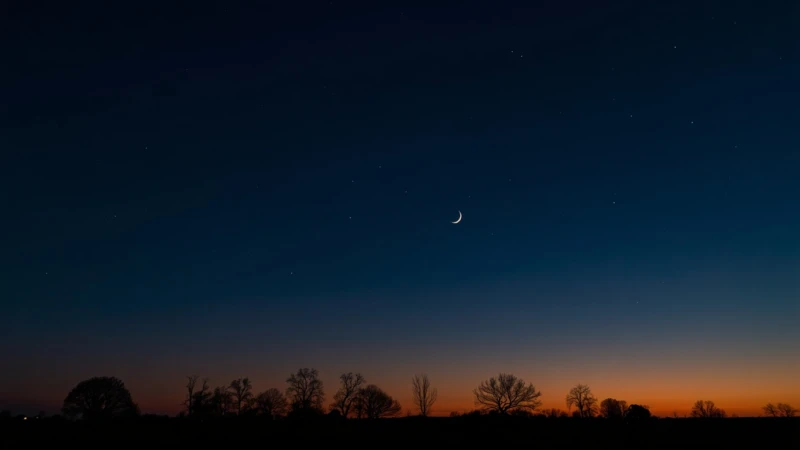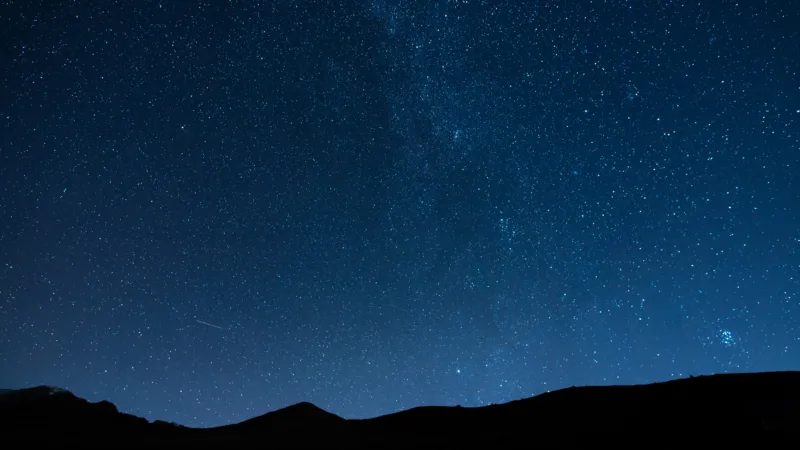
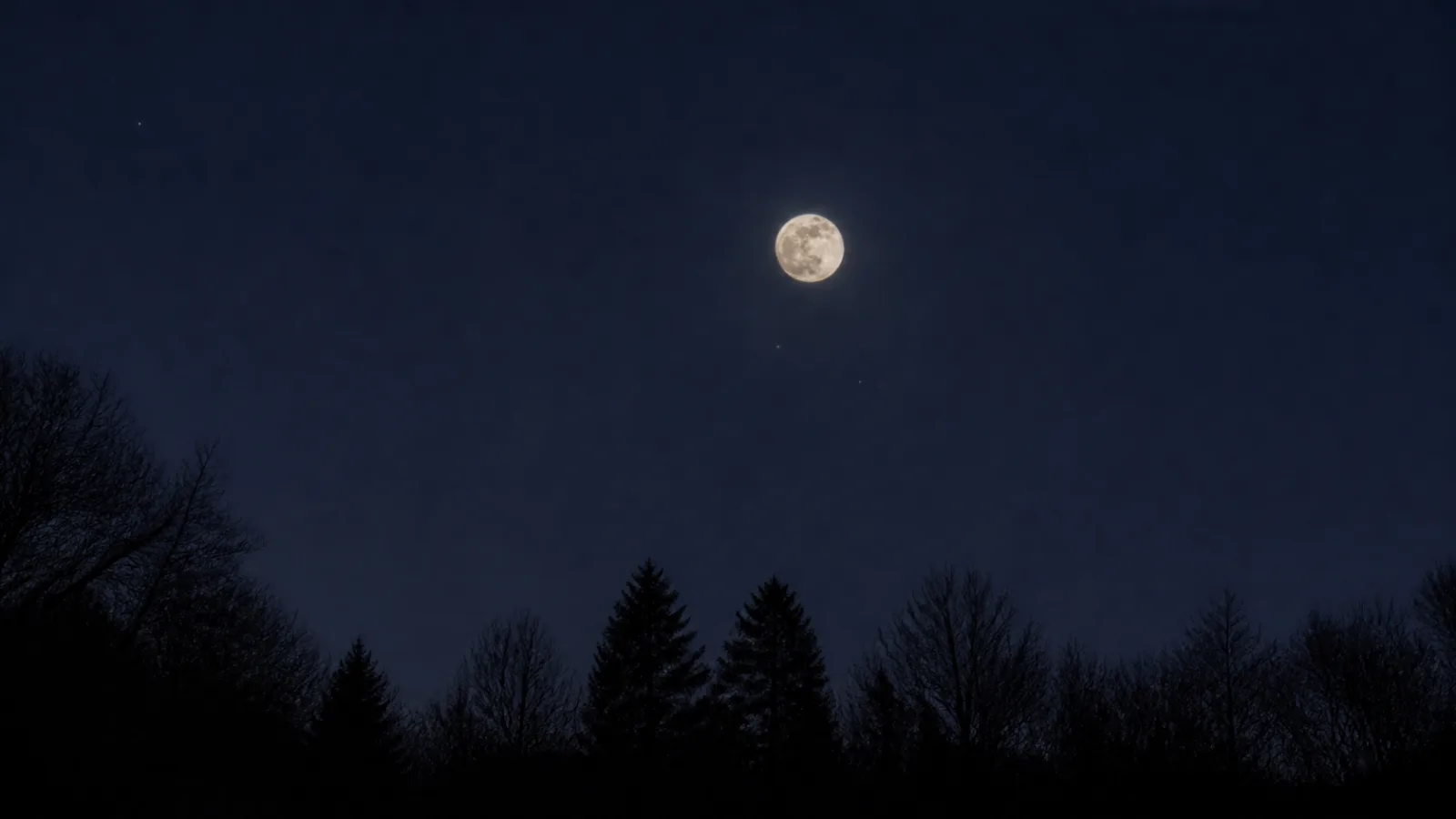
The week opens with the Hunter’s Moon rising just after sunset on Monday, covers the Pleiades on Tuesday night, then thins toward last quarter on Sunday, when the clocks also go back and the evenings turn dark by 7 PM. Saturn owns the evening, Jupiter and Mars the dawn, and Venus is about to return. Times below are for Dallas in Central Time; every page linked here converts them to your city.
The Moon: from full to last quarter
- Monday, October 26: the Hunter’s Moon, full at 11:11 PM on Sunday, rises at 6:52 PM, eleven minutes after sunset. This is the night to watch it come up large and orange over the eastern horizon.
- Tuesday, October 27: 97 percent lit, rising at 7:38 PM.
- Wednesday, October 28: 91 percent, rising at 8:33 PM.
- Thursday, October 29: 83 percent, rising at 9:36 PM.
- Friday, October 30: 74 percent, rising at 10:46 PM.
- Saturday, October 31: 63 percent, rising at 11:57 PM, so Halloween evening is moonless until almost midnight.
- Sunday, November 1: last quarter at 2:28 PM; the Moon sets at 1:21 PM and there is no moonrise at all on Sunday. The next is at 12:06 AM on Monday.
Notice how the gap between moonrises stretches from 46 minutes on Tuesday to 71 on Saturday; our new guide to why the Moon rises later every night explains it, including Sunday’s missing moonrise. The October full moon page has rise times for your city.
Tuesday night: the Moon covers the Pleiades
On the night of October 27 the nearly full Moon passes in front of the Pleiades star cluster for much of North America, hiding and then releasing the brighter stars one by one. The Moon’s glare makes it a binocular and telescope event rather than a naked-eye one. Our guide to the occultation has the timings and the stars to watch; the Pleiades guide shows where the cluster sits once the Moon has moved on.
All week: Saturn in the evening
Saturn is 18 to 22 degrees up in the east at dusk and 58 degrees high in the south around midnight, at magnitude 0.8, three weeks past opposition and still well placed. The Moon’s glare does not trouble it, and a small telescope shows the nearly edge-on rings. Neptune, at magnitude 7.8, is in the same region for telescope users. Uranus rises in the north-east by mid-evening, a month from its November 25 opposition. The Saturn page gives its height at any hour from your city.
Before dawn: Jupiter and Mars close in
Jupiter, at magnitude -2.0, is 62 to 66 degrees high in the south-east at dawn with Mars, at magnitude 0.9, above and to its right and Regulus below and to its left. The two planets are 8 degrees apart on Monday and under 6 degrees by Sunday, closing a third of a degree a day toward their November 16 conjunction. The dawn is bright by 7:15 AM until the clocks change, then by 6:20 AM. Next Monday morning, November 2, the crescent Moon lands a degree from Mars; our guide to that morning is already up.
Venus passed inferior conjunction on Friday night and spends this week lost in the Sun’s glare. It returns to the dawn sky from about November 2, very low in the east. Mercury is heading for its own inferior conjunction on November 4 and is gone too. Our Venus guide has the dates for its reappearance.
Meteors and Halloween: Taurid season, with a bright Moon
The Southern Taurids are active all week ahead of their November 5 peak, and the Northern Taurids began on October 20. Rates are only a few an hour, but Taurids are slow and often bright, and a fireball or two is possible any clear evening before moonrise. The Orionids continue at a low level until November 7. With the Moon up most of the night until Friday, the best meteor hours this week are the early evening, before moonrise, from Wednesday onward. Halloween evening is the darkest of them, with no Moon until 11:57 PM.
At 2 AM on Sunday, November 1 clocks in most of the United States and Canada go back an hour. Sunset in Dallas moves from 6:37 PM on Saturday to 5:36 PM on Sunday and the sky is fully dark before 7 PM. Our guide to what the clock change does to the night sky has the before-and-after times. Nothing on this site needs adjusting; the times shown for your city already follow its time zone rules.
Looking ahead
Monday, November 2: the Moon, Mars and Jupiter line up at dawn, and from Australia and South-East Asia the Moon covers Jupiter on the morning of the 3rd. Thursday, November 5: the Southern Taurids peak under a thin Moon. Saturday, November 7: the crescent Moon, Venus and Spica form a tight triangle at dawn. Monday, November 9: new moon, and the darkest skies of the month. Monday, November 16: Mars passes 1.2 degrees from Jupiter. The full list is on the events calendar, and if you garden, this week’s waning Moon is the traditional window for bulbs, garlic and root crops; see our look at whether gardening by the Moon works.