November 2026 is a morning month. Jupiter and Mars meet before dawn on the 16th, Venus returns as the Morning Star and reaches its brightest on the 27th, and Mercury joins them for the last ten days. The evenings belong to Saturn, to a new-moon dark spell around the 9th for the Taurid fireballs, and to the Beaver Moon on the 24th, which rises at sunset and is the closest full moon of the year so far. Clocks go back on the 1st, so all of it happens an hour earlier by the clock. Times below are for Dallas in Central Standard Time; every page linked here converts them to your city.
The Moon this month
- Sunday, November 1: last quarter at 2:28 PM, and a day with no moonrise at all in Dallas, since the Moon rises at 11:57 PM on the 31st and next at 12:06 AM on the 2nd. Our moonrise guide explains why.
- Monday, November 9: new moon at 1:02 AM. The nights from about the 5th to the 13th are the darkest of the month.
- Tuesday, November 17: first quarter at 5:47 AM.
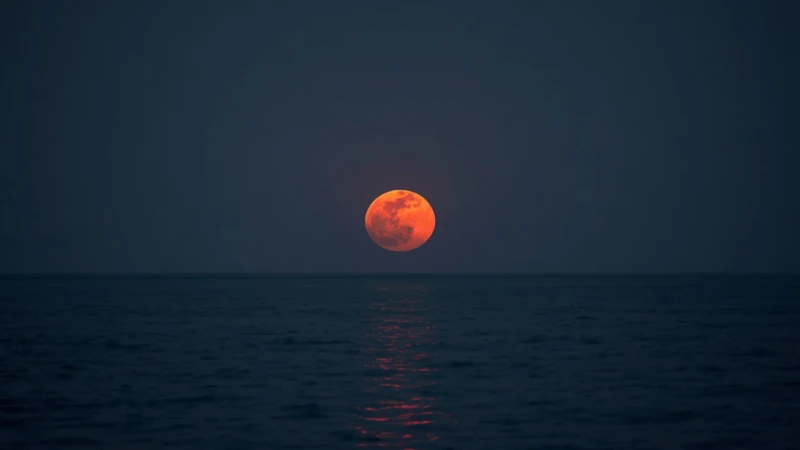
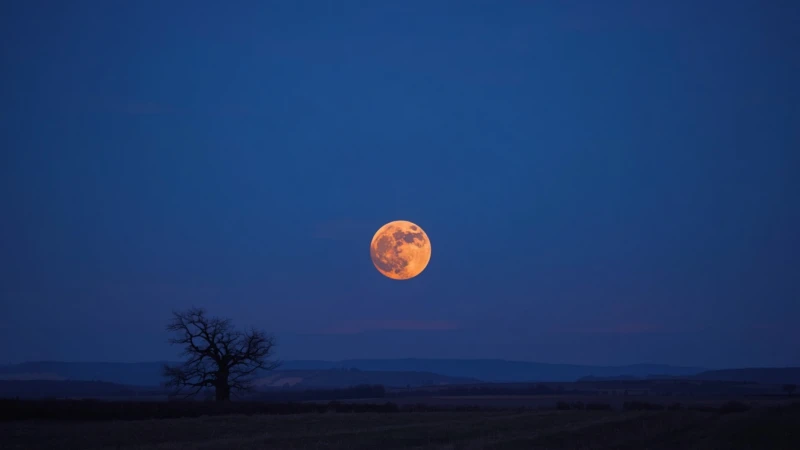
- Tuesday, November 24: the Beaver Moon, full at 8:53 AM (14:53 UTC), 360,768 km away. It rises at 5:17 PM on the 24th, five minutes before sunset, and the evenings of the 23rd and 24th both show a full-looking Moon. The November full moon page has moonrise for your city.
Daylight saving time ends at 2 AM on Sunday the 1st across most of the United States and Canada. Sunset in Dallas drops from 6:37 PM to 5:36 PM and the sky is fully dark before 7 PM for the rest of the year. Nothing in the sky changes, only the clock; our clock-change guide has the before-and-after times.
November 2: the Moon, Mars and Jupiter before dawn
On Monday morning the 40 percent crescent Moon sits about a degree from Mars with Jupiter six degrees further on and Regulus beyond, all 60 to 70 degrees high in the south-east at 6 AM. From Australia and South-East Asia the Moon covers Jupiter on the morning of the 3rd. Our guide to that morning has the hour-by-hour view.
November 5 and 12: the Taurid fireballs
The Southern Taurids peak around Thursday the 5th and the Northern Taurids around the 12th, with a thin crescent Moon out of the way for both. Rates are low, five or so an hour, but the Taurids are slow and bright, the shower most likely to give you a fireball on an ordinary evening. The radiant in Taurus is up from mid-evening, so unlike most showers there is no need to wait for the small hours. See the Southern Taurids and Northern Taurids pages for the peak times in your zone.
November 7, 20 and 27: Venus and Mercury return to the dawn
Venus is back in the morning sky from the first days of the month, climbing fast after its October 23 conjunction. On Saturday the 7th the 3 percent crescent Moon rises at 5:18 AM and stands a degree from Venus, with the star Spica a degree and a half further on, all within one binocular field 15 degrees above the south-eastern horizon at dawn. The event page gives the moment for your city. Venus goes on to reach greatest brilliancy around the 27th at magnitude -4.7, a fat crescent in any telescope, 30 degrees up at dawn.
Mercury reaches greatest elongation west on the 20th, 20 degrees from the Sun at magnitude -0.5, and stands 12 to 13 degrees up in the south-east at dawn from the 16th to the 25th. November morning showings are the good ones for the northern hemisphere, because the ecliptic stands steeply at dawn in late autumn. Look below and left of Venus about 40 minutes before sunrise.
November 16: Mars passes Jupiter
The conjunction of the month. Mars passes 1.2 degrees from Jupiter at 04:05 UTC on the 16th (10:05 PM Central on the 15th), so the mornings of the 15th and 16th show the pair at their closest, 71 degrees high in the south at 6:30 AM with Regulus 4 degrees to the lower left. Both fit in one binocular field. Our conjunction guide has the day-by-day separations. The Moon returns to the pair on the morning of Monday the 30th, 56 percent lit and 2 degrees from Jupiter, with the planets by then 5 degrees apart; the planets page shows every pairing of the month for your city.
November 17 and 18: the Leonids
The Leonid meteor shower peaks on the night of the 17th to 18th, with forecasts ranging from midday on the 17th to midnight UTC on the 18th, so both pre-dawn sessions are worth it. The first-quarter Moon sets around midnight, leaving the hours from 1 AM to dawn dark, and the radiant in the Sickle of Leo sits about 8 degrees from Mars and Jupiter. Expect 10 to 15 fast meteors an hour under a dark sky; no storm is forecast this year. The Leonids page has the details.
November 24: the Beaver Moon
Full at 14:53 UTC on the 24th at 360,768 km, closer than any full moon of 2026 so far, including January’s. Whether that makes it a supermoon depends on whose definition you use: by the 360,000 km rule this site follows it misses by 768 km, while by the wider 90-percent-of-perigee rule many outlets use it qualifies, as do December’s and January’s. Either way it will look a little larger than average rising at sunset on the 24th. Our supermoon explainer covers the definitions.
The evening sky, and Uranus at opposition on the 25th
Uranus is opposite the Sun on the 25th, up all night and as bright as it gets at magnitude 5.6, in Taurus about 5.5 degrees to the lower left of the Pleiades. That is a binocular object from a dark site and a small greenish disc in a telescope. The full Moon sits 7 degrees from it on the night of the 24th and spoils the week of opposition; the first half of the month, with the Moon absent, is the better time to hunt for it, and the planet changes little from one week to the next.
Saturn is the evening planet, 22 degrees up in the south-east at dusk on the 1st and 42 degrees by the 30th, highest in the south around 10 PM early in the month and 8 PM by the end, at magnitude 0.9 with its rings nearly edge-on. Neptune is nearby at magnitude 7.8 for telescopes. The Pleiades, Taurus and Orion rise through the evening, Andromeda is overhead by 8 PM, and the Andromeda Galaxy is an easy binocular target in the dark first half of the month.
December preview
The Geminids, the strongest shower of the year, peak on the night of December 13 to 14 with a 22 percent Moon. The December solstice is on the 21st at 20:50 UTC, and the Cold Moon on the 24th, at 356,740 km, is the closest full moon of 2026 and a supermoon by every definition. The full list is on the 2026 events calendar.