This is the darkest week of October and one of the busiest. The Moon shrinks from a morning crescent to new moon on Saturday, leaving every evening moonless. It passes Mars on Monday morning and hides Jupiter on Tuesday morning, the Draconid meteor shower peaks on Thursday evening under a moon-free sky, and Saturn, one day past opposition, is up all night. Times below are for Dallas in Central Time; every page linked here converts them to your city.
The Moon: crescent mornings, dark evenings
- Monday, October 5: 27% lit, rising at 2:05 AM beside Mars.
- Tuesday, October 6: 17% lit, rising at 3:13 AM and passing in front of Jupiter around 5:24 AM.
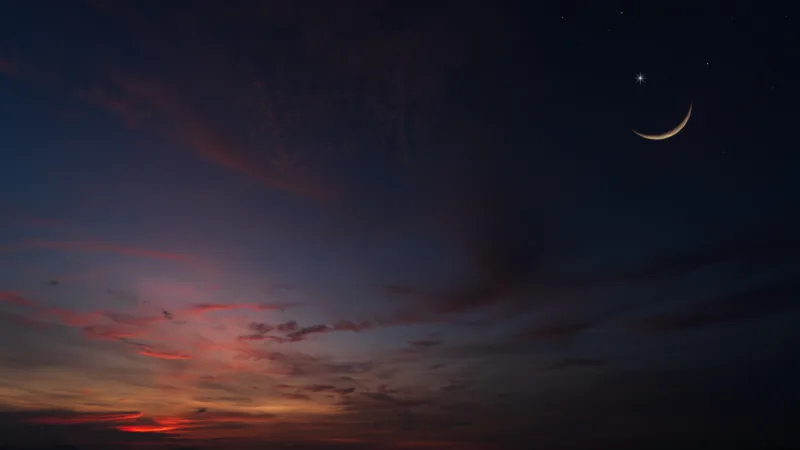
- Thursday, October 8: 4% lit, rising at 5:23 AM, a hair-thin sliver in the dawn.
- Saturday, October 10: new moon at 10:50 AM. Invisible, beside the Sun.
- Sunday, October 11: 1% lit, setting at 7:20 PM, too close to the Sun to catch. Look on Monday the 12th instead, when a two-day-old crescent sits about 3 degrees from Mercury, very low in the west-south-west after sunset.
Evenings are dark from the end of twilight, about 8:25 PM, right through to dawn all week. The moon calendar has rise and set times for your own city.
Monday and Tuesday mornings: the Moon meets Mars, then covers Jupiter
Set an alarm for both. On Monday the crescent Moon rises a little over a degree from Mars, the pair climbing to 50 degrees high in the east by 5 AM. On Tuesday the thinner crescent passes directly in front of Jupiter, the brightest object in the morning sky, in an occultation visible from most of the United States and Canada, Mexico and the Caribbean. Jupiter disappears behind the Moon’s bright edge and reappears from the dark edge up to an hour later; the exact minutes depend on your location. Our guide to both mornings has the timings and how to watch.
Thursday evening: the Draconids
The Draconid meteor shower peaks on Thursday, October 8. Expect up to about 10 slow meteors an hour under a dark sky, fewer from town, but this is an evening shower: the radiant in the head of Draco is highest in the north-west as darkness falls and sinks through the night, so watch from about 8:30 PM to midnight rather than before dawn. With the Moon a 4% sliver that rises only just before sunrise, conditions could not be better. The Draconids are also famous for unpredictable outbursts; none is forecast, but it costs nothing to look. The full plan is in our Draconids guide.
Saturn, just past its best
Saturn was at opposition on Sunday, October 4, and this week it is as bright and as large in a telescope as it gets this year. It is 23 degrees up in the east by 9 PM and 55 degrees high in the south-east at midnight, magnitude 0.6, the obvious cream-coloured “star” in Pisces. A small telescope shows the rings, tilted 7 degrees toward us; a 4-inch on a steady night shows the Cassini Division. Neptune sits 9 degrees to Saturn’s west for binocular hunters; use Saturn as the signpost.
Evening twilight: Mercury, and the last of Venus
Mercury is climbing toward its greatest elongation on October 12 and is about 7 degrees above the west-south-west horizon 20 minutes after sunset this week, a hard target from northern latitudes, magnitude 0.0. Binoculars find it first; a flat horizon is essential. Venus is brighter but lower, only 4 or 5 degrees up at dusk and setting minutes later, on its way to inferior conjunction on October 24. This is the last week to glimpse the Evening Star before it moves to the morning sky in November.
Deep sky: the moonless window
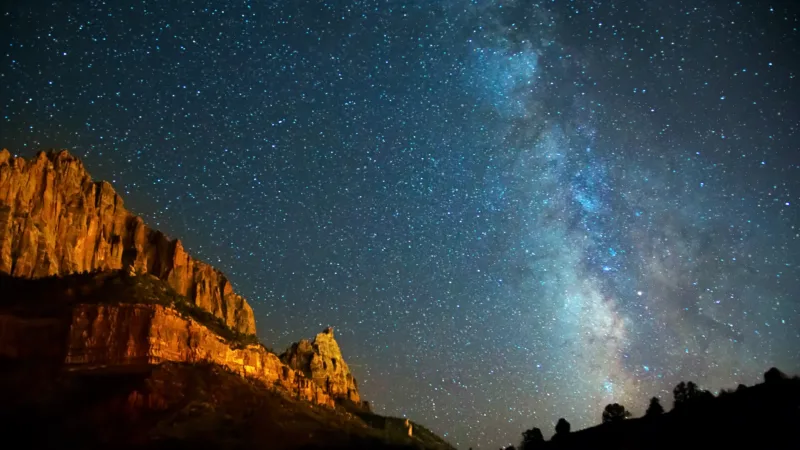
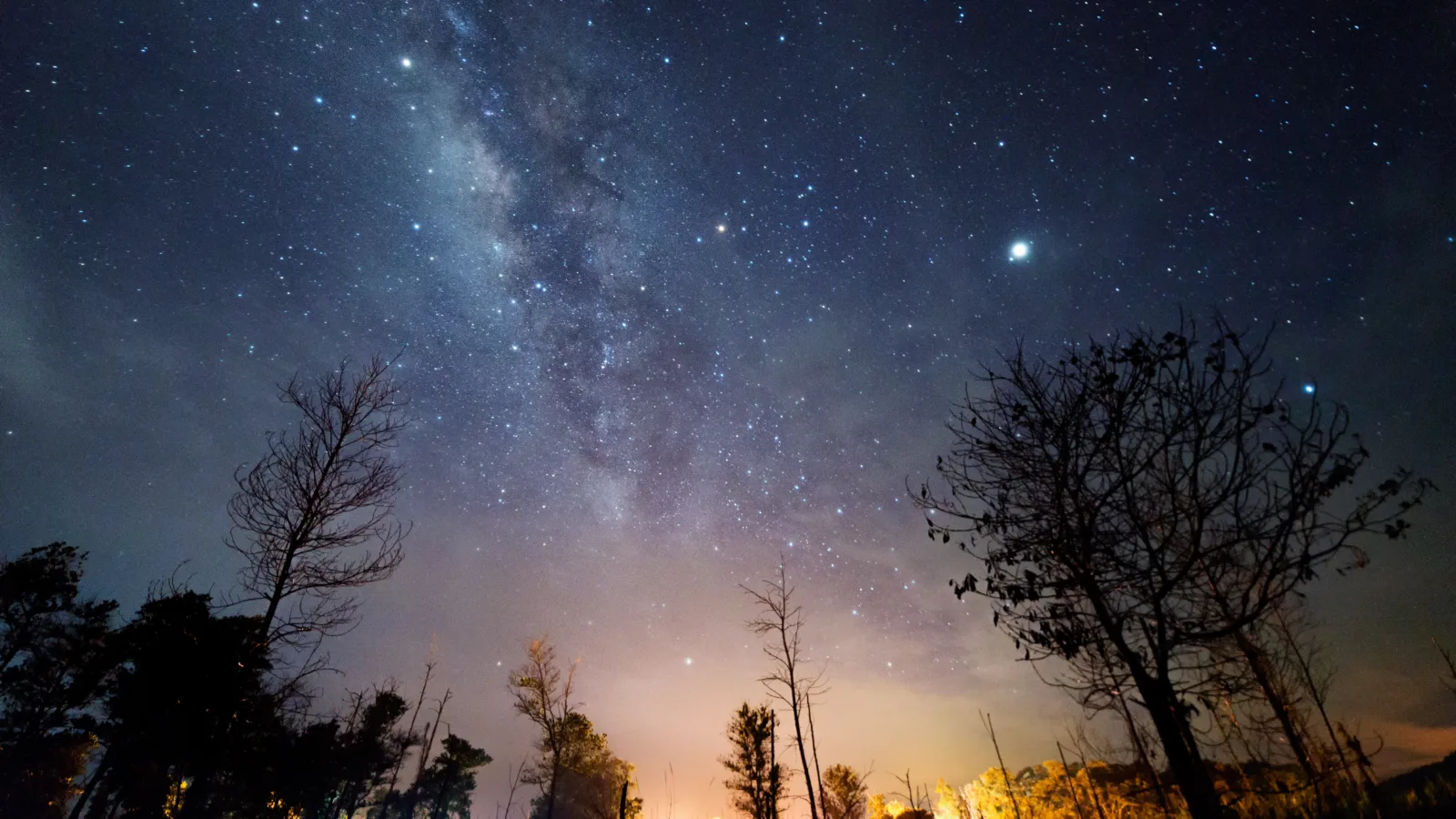
With no Moon in the evening, this is the week for faint targets. The Milky Way still arches overhead in the first hours of darkness, the Andromeda Galaxy is high in the east by 10 PM, and Uranus, at magnitude 5.6 a few degrees to the lower left of the Pleiades in Taurus, is 27 degrees up in the east by midnight for binoculars.
Looking ahead
Next week brings the Moon back to the evening sky, starting with the Mercury pairing on October 12 and reaching first quarter on October 18. The Orionids peak on October 21 with a 75% Moon in the way, and the Hunter’s Moon is full on the night of October 25, at 11:11 PM Central Time (October 26 in UTC). The rest of the month is in our October sky guide and on the events calendar.